
.

FOOD BUSINESS NEWS:

Discussions about the food industry, restaurants, and licensed food brand extensions

A World Leader

A World Leader
One of the World's Top 20 Licensing Agents
Showing posts with label Tasty Tidbits. Show all posts

Monday, March 8, 2010

Tasty Tidbits

• Only one of the 27 largest food companies reported a decrease in sales in 2008, with 16 reporting increases in net income. Five companies recorded net losses, the most in the last six years.

• Sales of microwaveable packaging in the U.S. will reach $1.7bn by 2013, a 16% growth rate since 2003. For those who want to know more, a complete report can be purchased for $4,500.

• When it comes to ice cream, Californians like Mint Chocolate Chip, Neapolitan and Rocky Road, and prefer eating it at Baskin-Robbins over trendier places like Cold Stone Creamery (see “World Food” above).

• In another tasty ice cream story, and a sign that marketers are under pressure, Unilever’s North American ice cream unit has announced how 6 varieties of Klondike bars, the chocolate-covered ice cream squares, will now have 25% more chocolate coating. Unilever’s Breyers ice cream brand was among the first companies to sell their bulk ice cream in less than ½ gallon containers while keeping the price of the old ½ gallon packaging.

• And finally, comfort food seems to vary by generation (duh!). Boomers prefer “classic” foods such as braised meats, casseroles and ice cream, along with foods from childhood, including peanut butter, popcorn, canned tuna, chicken noodle soup and oatmeal. Gen Xers prefer commercial fast food burgers or burritos, and want their brands in things like cookies, ice cream, candies and snacks. Gen Yers aren’t picky and range from burritos to ramen noodles, though usually with a healthy angle (sushi and fruits) and with no particular loyalty to brands.

This blog includes excerpts from a weekly round-up of food industry & food licensing news provided free to Broad Street Licensing Group's clients, and as a paid subscription service (6 months $695; 1 year $1,125).

Too busy to keep up with the news wires & publications about the food business? If you or your company would like to subscribe to our news service, call Danielle Foley at Broad Street Licensing Group (tel. 973-655-0598) and ask for your free sample or click on our website.

Tuesday, March 2, 2010

Tasty Tidbits


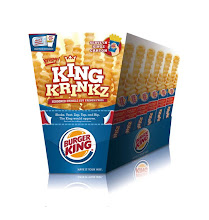
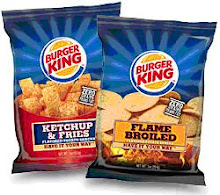
• The Inventure Group, a licensee of our client Burger King, is doing well: net earnings for the 2nd quarter ending June 27th rose 44% to $1.038MM, equal to 6¢ per share on the common stock, up from $722,540, or 4¢ per share a year ago. Industry-wide, salty snacks are growing with sales for the first half 2009 up 3.5% in the c-store sector, and potato chips up 10%. Only packaged ready-to-eat popcorn did better (13%) while alternative snacks were up 2%.

• A team of researchers from the University of Minnesota’s BioTechnology Institute (BTI) have uncovered an enzyme that will make detecting melamine in milk, ice-cream and chocolate drinks easier and less-expensive. The group plans to adapt the test to find melamine in seafood and meat. Melamine contamination in milk products and baby formula proved fatal in China, and was blamed for pet fatalities in foods imported into the U.S.

• It’s a sue-happy world, and Denny’s isn’t alone in court dates: (see above): Applebee’s and Weight Watchers have been hauled into a Cincinnati court over the fat and diet “points” on the Cajun Lime Tilapia by an Ohio woman who claims fraud, negligence, and a conspiracy to conceal the accurate nutritional information from consumers. Applebee’s Weight Watchers’ menus list calories, fat and the number of “points” for each meal to assist those on the Weight Watchers diet system. Other current legal claims against restaurants are one alleging McDonald’s allowed workers infected with Hepatitis A to infect a patron, one that says a patron bit into a condom in the cheese topping of a bowl of French onion soup at a Claim Jumper restaurant in Mission Viejo, CA, and a suit (also filed in New Jersey— is this a trend?) by a nonprofit vegan advocacy group, The Cancer Project, that demands hot dog makers warn consumers with new labels about its claim that the American Institute for Cancer Research links eating 50 g. of processed meat (the amount of a single hot dog) a day to a 21% increased colorectal cancer risk. The American Meat Institute has asked the court to dismiss the suit as frivolous.

• And in a final, sad note (though one tinged with lawyerly elements in keeping with the item above), another beloved celebrity has passed on: Gidget, the Chihuahua who played Nacho in the famous series of Taco Bell commercials has died at 15. Having made famous the phrase "¡Yo quiero Taco Bell!" she eventually became the focus of a multi-million dollar lawsuit between Taco Bell, their ad agency, and the owners of the Psycho Chihuahua character. The latter successfully established in court that the chain and its agency had stolen their IP by creating a series of ads uncannily like their edgy, talking dog. BSLG president Carole Francesca testified as an expert witness for the plaintiffs, and was later credited by their legal team with destroying Taco Bell’s case. The suit is still under appeal.

This blog includes excerpts from a weekly round-up of food industry & food licensing news provided free to Broad Street Licensing Group's clients, and as a paid subscription service (6 months $695; 1 year $1,125).

Too busy to keep up with the news wires & publications about the food business? If you or your company would like to subscribe to our news service, call Danielle Foley at Broad Street Licensing Group (tel. 973-655-0598) and ask for your free sample or click on our website.

Thursday, February 18, 2010

Tasty Tidbits


• According to New American Dimensions, a Los Angeles-based firm that monitors ethnic trends in the U.S., there are more Chinese restaurants than McDonald’s, Wendy’s and Burger King restaurants combined.

• As a sign of the times, agribusiness giant Cargill has announced it will shut down its hydrogenated oil production line at a Wichita, KS plant. The demand for the product has diminished greatly since the movement to reduce or eliminate trans fats came about. The process adds hydrogen molecules to vegetable oil producing semi-solids like shortening used in baking and other food processing tasks.

• Target has opened 23 new stores, bucking the retailer depression. Only four are general merchandise stores, while 17 have expanded food options and 2 are full-grocery SuperTargets. Target is trying to push its private label brands Archer Farms, Choxie, Market Pantry and Up & Up.

• Changes in packaging focusing on smaller sizes for convenience stores and “small footprint” operations bode for growth in the US meat & poultry packaging market according to a study by The report by The Freedonia Group entitled Meat, Poultry and Seafood Packaging which predicts it will reach $9bn by 2013.

• Predictions about the death of the Good Humor Man is perhaps premature, but entrepreneurs attracted to mobile ice cream sales by the low start-up costs and nearly non-existent job training have found the market off by 25% in some areas. Ice cream was long considered a necessary luxury and otherwise recession-proof, but that’s no longer the case.

• While the scotch market continues to age-out and decline in size, premium single-malt distiller The Macallan is releasing a new line of four varieties aimed at the global travel (i.e., gift) market. Ranging from the “value priced” Macallan Select Oak (three oak casks, including former sherry barrels) is priced at $53/liter up to The Macallan 1824 Limited Release (only the oldest sherry casks made from oak produced by the Tevasa cooperage in Jerez, Spain) at a whopping $2,000/700ml. And who says conspicuous consumption is so yesterday?

• The bags go up, the bags go down: PepsiCo’s Frito-Lay and other snack makers are rolling back the de facto price increases of last year when packages were shrunk while prices stayed the same. Now the trend is in reverse, and F-L is releasing Doritos, Cheetos and Fritos in 20% larger bags but maintaining the same pricing.

• Suzie Wong would be amused: General Mills is rolling out a line of Chinese frozen entrees under the new Wanchai Ferry brand (Wanchai is the district in Hong Kong where the movie character Suzie Wong lived, and a branch of the Star Ferry connects it with the mainland). Claiming cooks can plate a complete Chinese dinner for two in 14 minutes, General Mills is offering five flavors at an MSRP of $7.49. A coupon for the product can be downloaded at http://www.WanchaiFerry.com.

• Restaurants know more consumers are eating at home, but if anyone has any doubts, Allrecipes.com double its site visits in the past year, and will launch a similar site in Germany.

This blog includes excerpts from a weekly round-up of food industry & food licensing news provided free to Broad Street Licensing Group's clients, and as a paid subscription service (6 months $695; 1 year $1,125).

Too busy to keep up with the news wires & publications about the food business? If you or your company would like to subscribe to our news service, call Danielle Foley at Broad Street Licensing Group (tel. 973-655-0598) and ask for your free sample or click on our website.

Tuesday, February 9, 2010

Tasty Tidbits


• The non-grocery category of the retail sector continues to struggle as evidenced by Best Buy’s first quarter report for fiscal 2010: net earnings were $153MM, a decline of 15% compared with $179MM 1 year ago. In a sign of improvement and aggressive marketing, total revenue increased 12% to $10.1bn, compared with $9bn for the first quarter of fiscal 2009. Overall the domestic segment’s first-quarter revenues totaled $7.5bn, an increase of just under 1%. Part of the growth was from 115 stores added to the chain in the past year, with comparable-store sales declining 4.9%.

• Regular readers our subscription newsletter know already that IBC (Interstate Bakeries Corp.) recently emerged from bankruptcy. Makers of Wonder Bread, IBC is one of the few major bread companies around. But following their entry into Chapter 11, they closed four plants in the Southern California market, but are now poised to return with Wonder, Home Pride and Nature’s Pride brands.


• Mobile consumer marketing continues to catch on with Mass Connections developing “Consumer Alert” to update potential customers with real-time messages about new promotions. The service will rolled into the existing promotional & marketing campaigns the company develops for retailer clients.


• CIT Group, Inc. has fended off bankruptcy after being turned down for more U.S. Treasury bail-out funds after seeking help from the private sector. The company has been especially active in lending money to restaurants.


• NYC’s White Coffee has licensed the Kahlua brand for flavored coffees.

• "Getting lit up" might take on a different meaning in Arizona now that the governor has signed a bill authorizing those with concealed weapons permits to “pack heat” at bars & restaurants that serve alcohol. Owners who don’t want gunplay will have to post a sign outside their establishments saying “no guns allowed.” The bill was backed (are we surprised?) by the other NRA: the National Rifle Association.

• On a lighter note, Cake.com, a supplier of cake decorating products, has been credited by The Guinness Book of World Records with the top cupcake. Weighing 150 pounds, it can serve 1,500 of your closest friends. Frosted and presented at the Mall of America in Minnesota, it’s a foot tall and 2 feet wide, and was attended by 2,500 normal-sized cupcakes.

This blog includes excerpts from a weekly round-up of food industry & food licensing news provided free to Broad Street Licensing Group's clients, and as a paid subscription service (6 months $695; 1 year $1,125).

Too busy to keep up with the news wires & publications about the food business? If you or your company would like to subscribe to our news service, call Danielle Foley at Broad Street Licensing Group (tel. 973-655-0598) and ask for your free sample or click on our website.

Wednesday, February 3, 2010

Tasty Tidbits

• The Consumer Price Index for all food at-home compiled by the Bureau of Labor Statistics of the U.S. Department of Labor fell 0.1%, its fifth straight month of decline.

• Energy shots, 2 oz. drinks with concentrated doses of caffeine, B vitamins and amino acids, were all but unheard-of four years ago. Now sales are expected to reach $700MM this year, almost double last year’s $370MM. They cost 20x the per-ounce cost of a Coke, and are the rage among college students, drivers, construction workers and others who need to stay alert. A 7-Eleven College Park, MD, sold 400 shots during finals week this Spring.
• A new restaurant chain called University Char-Grill will debut in Rock Hill, SC, with plans to open 30 others over the next 5 years. The menu features burgers, grilled chicken sandwiches and 20 flavors of milkshakes, and it targeting the “fast casual” middle ground between fast-food and formal restaurants.
• Mmmm, ice cream: 27% of Americans claim chocolate is their favorite flavor; 22% say it’s vanilla and cookie dough/cookies and cream. Some 45% claim their favorite way to eat ice cream is in a cup while 29% prefer a cone.
• Confirming what readers of our weekly newsletter already have been told, sales in the carbonated drinks category have been flat to slightly negative over the past 5 years according to Mintel. Up to 34% of adults purchasing beverages switched to water over carbonated beverages. This switch has impacted the convenience-store channel the most, where sales were down 1.9% ($8.3bn) and volume was off 5.5% ($5.5bn).
• Despite problems with the organics movement, a survey of wealthy consumers who’ve taken a hit in the recession by Packaged Facts shows they are still more likely to buy natural, organic and ethical foods. While other demographic groups have slowed or stopped their purchases of “green” items, consumers earning more than $75K as individuals ($100K as households) are actually more likely to be them.

This blog includes excerpts from a weekly round-up of food industry & food licensing news provided free to Broad Street Licensing Group's clients, and as a paid subscription service (6 months $695; 1 year $1,125).

Too busy to keep up with the news wires & publications about the food business? If you or your company would like to subscribe to our news service, call Danielle Foley at Broad Street Licensing Group (tel. 973-655-0598) and ask for your free sample or click on our website.

Friday, January 15, 2010

Tasty Tidbits


• The NPD Group in their A Look into the Future of Eating claims consumer preference for convenient food options will grow over the next 10 years. The data for the study comes 5K persons tracked for two weeks to record their eating choices.

• Walgreens pharmacy same-stores sales increased 9% during June 2009 thanks to increases in 90-day prescription plan customers and an extra weekday on the calendar. In all, Walgreens generated total sales of $5.24bn (vs. $4.8bn one year ago).

• Rite Aid reported same-store sales down 0.6% due to an increase in the use of generic drugs. Rite Aid’s total sales were $1.97bn (vs. $2.02bn a year ago).

• Overall, retail clinics, which had looked like a gold mine for health care providers, were down as flu, sore throats and immunizations associated with colder weather were down. Wal-Mart announced 2 years ago it would open 400 clinics within 3 years and 2,000 within 7 years, but has only 34, down from 43 last Fall.

• Grocery chain Niemann Foods Inc. has contracted with American Digital Signage to provide a digital marketing program that will include digital signage and mobile text messaging communicating store announcements and sales promotions in a test at its Quincy, IL store.

• Husband forgot your anniversary? A small study from Australia suggests daily supplements of soy isoflavones could help boost a man’s mental function and memory.

• Having been called a “runaway train” by one industry analyst, McDonald’s continues to show why it dominates the fast food restaurant market: by giving away 10MM coffee samples as part of its “McCafe Mocha Monday” nationwide event that includes voting for the “McCafe Your Day” song-test and sweepstakes.

• As concern over food safety remains prominent, the US market for active & intelligent packaging is expected to grow 8.3% annually to $1.9bn by 2013, well above the overall packaging industry. “Active” and “intelligent” prolong shelf life for foods or react to spoilage by changing color.

• The European Food Safety Authority (EFSA) has declined to offer regulations governing the term “probiotic” despite pressure from both manufacturers and the scientific community who feel the term lacks precision and is being abused for commercial gain.

• Decatur, IL-based Archer Daniels Midland Co. has had its price-fixing fine reduced by the European Court of Justice to €29.4MM ($41.2MM) from €39.69MM ($55.5MM). The European Commission levied the original fine, describing the firm as “the leader in a secret cartel” of five companies that illegally fixed the worldwide price for citric acid from 1991-1995. The substance is a widely-used preservative in jams and jelly, as well as canned fruit.

This blog includes excerpts from a weekly round-up of food industry & food licensing news provided free to Broad Street Licensing Group's clients, and as a paid subscription service (6 months $695; 1 year $1,125).

Too busy to keep up with the news wires & publications about the food business? If you or your company would like to subscribe to our news service, call Danielle Foley at Broad Street Licensing Group (tel. 973-655-0598) and ask for your free sample or click on our website.

Thursday, January 7, 2010

Tasty Tidbits


• Whole Foods Market has signed on to the Non-GMO Project, a non-profit collaboration of manufacturers, retailers, processors, distributors, farmers, seed breeders and consumers, promising to employ the Non-GMO’s (genetically modified organism) Product Verification Program for its private label products.

• In the licensing arena, TV’s “Deadliest Catch” fishing boat captains Johnathan and Andy Hillstrand have teamed up with Trinity Design Group to create labels for a line of Bloody Mary mix manufactured and distributed by Lakeland, FL-based Hot Wachula’s Inc.

• Those who think the European Union food regulators need to “get a life” can take some small comfort by new rules which will remove specific marketing standards for the size & shape of most fruits and vegetables. Cabbage, onions, cherries, avocados and zucchini can now be sold without restriction, though specific marketing standards will apply to the 10 most popular fruits and vegetables, including apples, citrus and tomatoes. Funny-looking versions will have to be labeled as “non-standard.”

• General Mills, Inc. has launched a line of gluten-free Betty Crocker dessert mixes almost 1 year after the company entered the gluten-free category with a reformulated Rice Chex cereal. The mixes will retail for $4.49, about $2 more than traditional Betty Crocker mixes. Up to 12% of the U.S. population is looking to eliminate or reduce their gluten intake.

• As McDonald’s goes, so goes America? The U.S. dairy industry will be looking to The Golden Arches’ espresso coffee drinks (which can contain up to 80% milk) for its next boost in sales. Per capita milk consumption rose three years ago for the first time in 20 years due to McDonald’s introducing milk in re-sealable plastic bottles in 2004.

• Researchers at California State Polytechnic University-Pomona found that young children were unable to tell the difference between regular burritos and chocolate-chip cookies and those formulated with a whole grain and soluble fiber boost. This may lead to reformulating foods to include more healthy ingredients as a way of short-circuiting diseases in school kids from disadvantaged backgrounds.

• The website Serious Eats claims at least 10 gourmet street vendors in New York City are using Twitter to alert patrons of their arrival at a specific location or their routes for the day. The owner of Rickshaw Dumpling Bar, for example, begins sending out tweets to nearly 2,000 followers mornings alerting them where the truck will be parked that day.

• The “Yuck” Factor— you know you’ve lived too long or the emperor really DOES have some cool new clothes when trendy restaurants start incorporating mass market cereals and breakfast foods in dinner offerings: NYC’s The Oak Bar has Rice Krispies in foie gras to temp jaded palates, and Eleven Madison Park has oatmeal in a lobster casserole.

• Jamba Juice is selling off up to 150 of its company stores outside California to franchisees. The new owners are pledging to expand the number of outlets.

• Beekeepers are reporting up to 90% losses of their colonies from Colony Collapse Disorder (CCD), a mystery condition that threatens to harm the food chain due to the importance of bees in pollinating crops. No cause has been discovered as yet, though starvation, viruses, mites, pesticide exposure and climate change have all been advanced. Now the food industry is making plans to implement honey substitutes. Bell Flavors & Fragrances is looking at both natural and artificial honey flavors that would reduce the amount of honey in recipes. In addition, Häagen-Dazs Ice Cream has launched the “Häagen-Dazs loves Honey Bees” campaign to raise money for research. While the company does not use honey extensively as an ingredient, it claims more than 40% of its flavors are dependent on honey bee pollination. Finally, the USDA (US Department of Agriculture) is providing $4MM to the University of Georgia to study the causes of CCD.

This blog includes excerpts from a weekly round-up of food industry & food licensing news provided free to Broad Street Licensing Group's clients, and as a paid subscription service (6 months $695; 1 year $1,125).

Too busy to keep up with the news wires & publications about the food business? If you or your company would like to subscribe to our news service, call Danielle Foley at Broad Street Licensing Group (tel. 973-655-0598) and ask for your free sample or click on our website.

Wednesday, December 30, 2009

This & That

The Dark Side of Digital Marketing

While there has been a lot of hoopla recently about digital marketing and virtual coupons, online coupon fraud is on the rise. From 1986-2001, the Coupon Information Corp., the nonprofit agency that monitors the coupon industry, had only TWO CASES of coupon fraud. Even by 2007, there were only nine such incidents. In the past 18 months, 93 case files have been opened and the recession looks as though it’s going to make that worse. 1992 was the high water mark for coupon redemption (the end of the last major recession) with 7.9bn redeemed.

The losses aren’t virtual: Nestlé Purina Petcare Co. issued 250 coupons for a free bag of its adult dry dog food, and through early May, 2,754 coupons had been redeemed. Coca-Cola Co. had to withdraw a free 12-pack coupon from its “My Coke Rewards” program because of what it called “widespread counterfeiting,” and issuing a warning to consumers that “attempts to submit counterfeit coupons may result in civil action or criminal prosecution.” Counterfeiters reprint in-store coupons and smudge barcodes extending expiration dates. Coupon redemption is up 10% in the last quarter of 2008 (the latest stats available). Companies seeking to crack down on coupon abuse risk alienating customers who may not be aware the coupon they received from a friend or relative is bogus.

Without Sales There Are No Brand Impressions

With growing pressure on food retailers and manufacturers to cut costs and yet maintain margins, smaller food retailers are likely to see the amount of attention they receive from suppliers drop. Especially in areas like promotional support and personnel, marketers will be looking to cut costs and put their efforts into retailers with larger market share.

World News

The European Union (EU) has reprimanded the UK over import rules allowing irradiated food from non-EU countries that are processed in plants not pre-approved by the European Commission. Regulations state that EU countries can only accept food and food ingredients treated with irradiation from outside the bloc if they come from processing plants listed by the EC. No food safety issues are involved, but the “food police” are nonetheless adamant their viewpoint prevail. Britain insists new regs being promulgated this month will address the conflict.

The Chilean department-store chain La Polar rejected a proposed merger with supermarket chain Supermercados del Sur (owned by Latin American private equity fund Southern Cross). La Polar has rejected the models being pursued by competitors Cencosud and Falabella integrating department stores, supermarkets and other stores. La Polar has 40 department stores in Chile focused on the low end of the retail market, and is expanding into Colombia. Southern Cross bought La Polar in 1999, restructured its debt and took it public in 2003, but sold it again in 2006. Supermercados del Sur has 97 supermarkets in southern Chile with a 7% share of the national market.

This blog includes excerpts from a weekly round-up of food industry & food licensing news provided free to Broad Street Licensing Group's clients, and as a paid subscription service (6 months $695; 1 year $1,125).

Too busy to keep up with the news wires & publications about the food business? If you or your company would like to subscribe to our news service, call Danielle Foley at Broad Street Licensing Group (tel. 973-655-0598) and ask for your free sample or click on our website.

Tuesday, December 29, 2009

Tasty Tidbits

• Is anyone surprised? Two thirds of workers bemoan the difficulty in maintaining health eating habits at work. A new survey by Peapod Business Delivery (owned by grocery chain Ahold) had only 7% of respondents eating healthier at work than at home, with 50% saying temptation in the office was their biggest obstacle to a healthy work diet. The #1 option sought by workers is fresh produce, while on 36% of those surveyed said their workplaces offered that option.

• The Wall Street Journal has reported that Nestlé “refused to give [FDA] inspectors access to pest-control records, environmental-testing programs and other information.” The company is currently under investigation because of e. Coli showing up in its Toll House cookie dough. Industry insiders insist companies are not required by law to give inspectors this information, and therefore Nestlé practice isn’t out-of-line with the food industry.

• While the survey size was small (less than 150), a study by Givaudan and the National Institute for Health shows a small difference in the perception of “sweet” depending on one’s race. It is difficult to know, however, whether the differences are genetic or cultural. Cognac makers, for example, have long sweetened their products exported to Hong Kong, where the custom was to mix the alcoholic aperitif with orange soda.

• A new trend in QSRs is selling wine or other alcoholic beverages.

• A roster of well-known and obscure fast casual restaurants got the highest ratings from Parents magazine: Cosi was first, followed by Jason’s Deli, Noodles & Company, Fazoli’s, Panera Bread, ZPizza, Atlanta Bread Co., Corner Bakery Café, Taco Del Mar, and McAlister’s Deli.

• Scientists from Texas have completed the mapping of the melon genome, opening up possibilities for sweeter or more nutritious fruits. European scientists, from France and Spain, had previously succeeded in mapping two unconnected sections of the melon DNA sequence.

This blog includes excerpts from a weekly round-up of food industry & food licensing news provided free to Broad Street Licensing Group's clients, and as a paid subscription service (6 months $695; 1 year $1,125).

Too busy to keep up with the news wires & publications about the food business? If you or your company would like to subscribe to our news service, call Danielle Foley at Broad Street Licensing Group (tel. 973-655-0598) and ask for your free sample or click on our website.

Friday, December 11, 2009

Tasty Tidbits


• A joint study the 1.4MM African immigrants living in the U.S. estimates they make up a $50bn potential market. The survey was conducted by LA-based New American Dimensions (NAD), the U.S. African Chamber of Commerce, The Minneapolis Foundation and Aguilar Productions. Researchers, the research identifies the group as “largely untapped,” and points out an Islamic sub-segment where culturally- appropriate foods and beverages are currently lacking.
• Starbucks Corp. remains unable to find the “right” product mix, and will launch a line of salads. In addition, its baked goods will no longer contain HFCS (high-fructose corn syrup), artificial flavors or dyes. Where possible, preservatives will also be dropped from these products, and will cover 90% of the bakery items sold. Starbucks is also testing a Frappuccino formula in Dallas that incorporates these changes.
• In yet another sign the organics trend is slowing, sales of organic milk in California increased just .2% March, the most-recent month reporting to the California Department of Food and Agriculture. Totals reached 2.5MM gallons with increased totals for low-fat milk and drops in whole, reduced-fat and fat-free milk (source: California Farm Bureau).
• Kraft, playing on the word “singles” in its Kraft Singles line of packaged cheeses, is promoting grilled cheeseburgers for $1 in TV ads and on the Web, while Unilever is looking to grab some $1 buzz by giving away 25MM coupons for discounts on 2 boxes of Lipton Onion Soup mix as part of Lipton Onion Burgers priced at 85 cents per serving. Wal-Mart is running TV ads touting a dozen breakfast items for a buck or less as an alternative to QSR breakfasts costing up to $5. And finally, Campbell is looking at $1 price points for some condensed soups instead of the customary $1.59. The move is partly in response to the meteoric rise of dollar stores. According to one industry source, spending at dollar outlets by consumers earning more than $100K spiked 18% last year.
• The $11bn bottled water industry continues to find friction as concerns rise about the amount of waste it generates. Now the FDA has announced it will require bottlers to test their water sources for coliform and fecal contamination (previously the source did not have to be tested).
• OSI Restaurant Partners LLC, the parent company of the Outback Steakhouse, Bonefish Grill and Carrabba’s Italian Grill among others, has started shedding some of its smaller brands in order to pay down debt. Both Roy’s and Cheeseburger in Paradise have been sold back to their original owners. While privately-held, OSI hold public debt and reported its latest earnings as showing a net profit of $82.3MM, mostly on reducing its debt load by $20.8MM to $27MM. Revenues ($964.4MM) were down almost 10%, with same-store sales off 8.6% at Outback Steakhouse, 7.3% at Carraba’s, 10% at Bonefish Grill and 19.9% at Fleming’s Prime Steakhouse & Wine Bar. Last year the company’s first quarter earnings showed a loss of $9.7MM. The chain went private to avoid a continued hammering by Wall Street, but soon after ran into first a downturn in the casual dining sector followed by the Great Recession.

This blog includes excerpts from a weekly round-up of food industry & food licensing news provided free to Broad Street Licensing Group's clients, and as a paid subscription service (6 months $695; 1 year $1,125). Too busy to keep up with the news wires & publications about the food business? If you or your company would like to subscribe to our news service, call Danielle Foley at Broad Street Licensing Group (tel. 973-655-0598) and ask for your free sample or click on our website.

Wednesday, December 2, 2009

Tasty Tidbits


• The latest round in fooling the consumer comes with “smell infusions” for food packaging. ScentSational Technologies is developing with a baby-food producer to add pleasant odors to the caps so when parents open the jars, they can smell “freshness.” Similar technology is planned for cereal bags to suggest “sweet” while using less sugar.

• Louisville, KY residents eat more donuts per capita than anywhere else in the U.S. according to Interstate Bakeries Corporation (IBC) the marketers of WonderBread among other baked products. Cincinnati, Roanoke, Knoxville and Indianapolis follow behind on the top five U.S. donut-lovin’ regions with the favorite flavors glazed, chocolate, powdered sugar and plain in that order.

• No kidding: last summer, the USDA studied the U.S. goat industry for the first time, focusing on meat and dairy production.

• The Universal Product Code (UPC), a row of 59 machine-readable black & white bars and 12 human-readable digits, celebrated its 35th anniversary June, 2009. The first “live” use of a UPC was at a Marsh supermarket in Troy, Ohio, on June 26, 1974, when a cashier scanned a package of Wrigley’s gum. Every UPC incorporates 3 parts: the brand owner’s GS1 company prefix, the specific item’s reference number, and a check digit combining the other two groups to ensure accuracy. The next generation bar code, GS1 DataBar, will be introduced Jan. 1, 2010, and will be found on coupons and even loose produce like fruits and vegetables. It will include such information as “best before,” expiration dates or even lot numbers that will allow tracking for recalls.

• While not strictly-speaking a food industry development, we’re tracking the shift of the HBA market from department stores to drug stores. CVS and Walgreens in particular are revamping their departments, with CVS pushing its “Beauty 360” in-store boutique with a separate entrance that carries marquee brands once found only in Macy’s and Bloomingdale’s.

• The shift goes in other directions, too, as grocers expand their health and pharmacy sales: the Ralphs supermarket chain is giving away 30K sets of nicotine patches and gum at stores in Los Angeles after partnering with the Los Angeles County Department of Public Health and L.A. Care Health Plan to help publicize a stop smoking push.

• Coming on the heels of a report by The National Retail Security Survey that retail theft is up for the first time in six years is news from grocery retailer Winn-Dixie that internal theft is down 39% at the front end of the store with the amount per theft off 59% in the six months since the chain installed a new anti-theft technology system. The savings add up to more than $7MM. (The survey was compiled by the University of Florida).

This blog includes excerpts from a weekly round-up of food industry & food licensing news provided free to Broad Street Licensing Group's clients, and as a paid subscription service (6 months $695; 1 year $1,125). Too busy to keep up with the news wires & publications about the food business? If you or your company would like to subscribe to our news service, call Danielle Foley at Broad Street Licensing Group (tel. 973-655-0598) and ask for your free sample or click on our website.

Friday, November 20, 2009

Tasty Tidbits


• Somebody’s lying: 56% of consumers who regularly frequent Starbucks claim they also buy coffee from McDonald’s regularly. The figure is up from 51% last August, according to a Morgan Stanley & Co. survey. Nearly 47% of Starbucks customers claim to purchase McDonald’s coffee at least 1x/month, while 42% of the Mickey D customers insist they go to Starbucks the same amount.

• The US convenience store channel is expected to grow 5% annually over the next five years according to a report by research firm RNCOS.

• Organic dairy producer Stonyfield Farm claims adjusting its cows’ diets with more omega-3 feed like flax and grasses has cut greenhouse gas methane emissions from burping by 12-18%. I kid you not.

• With the EU set to ban most synthetic dyes in foods, the rush is on to find natural substitutes. Many food dyes are petroleum-based, and even though they are approved by the FDA, the EU ban is prompting even US companies to find substitutes. The current leading contender? Purple carrots.

• Six German states have banned Red Bull Cola (made in Austria) for minute traces of cocaine. The company denies the charge, saying it uses decocainized cocoa leaves that are safe and a common flavor ingredient.

• Those in the know understand Chinese restaurants offering to prepare dishes without MSG (monosodium glutamate) are really just telling diners what they want to hear. Now those diners can relax and stop worrying after a new study says the flavor enhancer does not cause nor contribute to allergic reactions (the so-called “Chinese restaurant syndrome”).

• A German research team reports finding a genetic link between gum disease (periodontitis) and coronary heart disease (CHD). The University of Kiel group found both diseases showed a common genetic variant on chromosome 9. This digest reported earlier that scientists were unsure why gum disease and heart disease seemed to occur in common, with theories that inflammation in the gums either introduced bacteria into the system, or that inflammation signaled an underlying health problem. The team reports that obesity, smoking and diabetes will all worsen the problem, and that dentists should take more aggressive treatment courses with much younger patients than previously thought. In a related study, Cincinnati Children’s Hospital Medical Center has done ultrasound measures of the carotid arteries of young people and found a link between a thickening of the walls and possible later heart disease, especially for those who are obese or have diabetes.

• Krispy Kreme continues to flounder, posting dismal stats for the first quarter: income off 54%, down to $1.868MM (3¢/share) from $4.034MM (6¢/share) this time last year. The huge drop was explained as due to $2.357,000 in impairment charges and lease termination costs. Sales were off 10% to $93.42MM, though company-owned locations reported a modest 2.1% increase.

• Mountain Dew is licensing the names and artwork for two new flavors from the hugely-popular “World of Warcraft” online role-playing game (11.5 million players estimated worldwide). Limited-edition line extension for the Game Fuel sub-brand will feature flavors Horde Red and Alliance Blue (opposing factions of the subscription-based game).

• Whole Foods Market has signed an agreement with Lady Moon Farms and Alderman Farms of Florida in support of the Coalition of Immokalee Workers’ (CIW) "penny-per-pound" program which claims it will improve wages for tomato harvesters.

• And celebrity chef Gordon Ramsey has admitted his ego got in the way and nearly cost him his culinary empire (not to mention the bagged prepared meals he was serving in place of fresh-made).

Excerpted from BSLG's weekly subscription news reader service Food Business News. To subscribe or for information about licensing, contact Broad Street Licensing Group (tel. 973-655-0598)

Monday, October 5, 2009

Tasty Tidbits


• Walgreen, under financial pressure after its merger with Rite-Aid, had good news in March as electronic prescriptions were up 211% over the same period last year. The increase is part of a 40MM electronic prescription blizzard the company anticipates this year. Retailers see the switch to electronic scripts as a crucial component of future growth.

• Among the recipients of the National Restaurant Association’s Kitchen Innovation Awards is Hobart’s Bluetooth-enabled “Combi Oven with Barcode Scanner” that automatically controls the cooking program with a wireless recipe exchange capability.

• Campbell Soup Co. has fueled speculation about the growth of artisan breads with its purchase of East Brunswick, NJ-based Ecce Panis. While artisan breads are a niche in the baking industry, this move could signal a shift to mainstream distribution. Other companies currently pushing artisanal breads include Nestle.

• Soluble fiber can now be added to beef and other meats. Marketed under the name LuraLean, the product is made from glucomannan which comes from the roots of the konjac plant. The fiber has already been successfully marketed for weight loss beverages and supplements due to its ability to absorb water and form a gel in the gut, increasing the sensation of being full. The company also claims the product will lengthen shelf life of meats because of its water-absorbing quality.

• With untold millions of bees dying off around the US for as-yet unknown causes, one potential culprit has been identified: mites. Mite-resistant bees will be introduced this Spring into the White House garden to pollinate its tress and shrubs.

• Despite the salmonella scare, peanut butter sales increased 5.6% in March over this time last year according to the National Peanut Board (yes, Virginia, there IS a National Peanut Board).
• According to a list of top 50 brewing companies by The Brewers Association, the top three craft breweries were Boston Beer Co., Sierra Nevada Brewing Co. and New Belgium Brewing Co., while the top three overall were Anheuser-Busch InBev, MillerCoors Brewing Co. and Pabst Brewing Co.

• Naked Juice is collaborating with the Rainforest Alliance, an international nonprofit organization that aims to ensure sustainable livelihoods for people while protecting wildlife and the environment. The Rainforest Alliance Certified seal will be placed on Naked Juice products containing bananas, which are found in 80% of the company's products.

• Dave & Buster’s, Inc. reported revenues decreased 7.2% to $134.9 million in the 4th quarter of 2008, compared to $145.4 million the same time in 2007. The decline was due to a 10.2% decrease in comparable store sales, a decline partially offset by additional sales at non-comparable stores, including three opened in fiscal 2008. Food and Beverage revenues decreased 9.2% while revenues from Amusements and Other decreased 4.7%.
• Dunkin’ Donuts will focus growth on larger airport hotels, resorts and vacation destinations in the East, Midwest and Southwest U.S. New footprints will include kiosks and self-serve hot coffee stations in addition to full retail stores. The brand’s first hotel restaurant opened recently in Concord, NC.

Excerpted from BSLG's weekly subscription news reader service Food Business News. To subscribe or for information about licensing, contact Broad Street Licensing Group (tel. 973-655-0598)

Tuesday, August 18, 2009

Tasty Tidbits


• In the "we all need a good laugh department," the legal sparring between Red Lobster and Captain D's Seafood Kitchen continues. After the latter received a cease & desist letter from the giant seafood chain protesting ads attacking its prices and service, the Nashville, TN-based upstart has issued its own letter demanding Red Lobster lower prices, improve service and end tipping. The only ones sure to profit from the dust-up will be lawyers.

• Not all retailers are doing well in the recession: Spartanburg, SC-based BI-LO has filed for Chapter 11 bankruptcy protection.

• Look for maple syrup prices to soar this year because of a shortage of the product in New England. That's good news for local farmers, however.

• Food equipment manufacturer Manitowoc has made Business Week’s list of "best corporate performers."

• America's love affair with chili shows no sign of abating, and QSR Qdoba Mexican Grill plans on embracing that love with a new Chili Verde entry.

• Black Angus Steakhouse has emerged from bankruptcy after it was purchased by Versa Capital Management Inc.

• Foie Gras, already banned by city ordinance in Chicago, is now headed for the same fate in San Francisco. Animal rights advocates have campaigned against the French delicacy on the grounds that it results from cruel treatment of the geese whose livers make up foie gras.

• In fruit news, Old Orchard Brands' fruit smoothies will reach national levels of distribution through a partnership with Chiquita Brands International, Inc. (who also owns fruit supplier Fresh Express).

• Wine.com is doubling its offerings of wines scoring 90 points or higher and which are priced under $20.

• Starbucks instant coffee endeavor is expanding to new Costco, Target and Barnes & Noble stores.

• Philadelphia-based Swallow is the latest restaurant to embrace the American comfort food, macaroni & cheese, this time in the form of a pizzeria-type bistro offering mac & cheese in a variety of flavors (Mexican, tuna casserole or Greek with feta cheese).

• Oats and quinoa (a South American plant) may provide a gluten-free substitute for semolina in pasta. Packaged Facts says the gluten-free market has expanded annually at 28% since 2004, growing from $580MM to $1.56bn. Estimates are gluten-free products will top $2.6bn by 2012.

• Balducci's appears to be one of the few food retailers not immune to the recession. The company will shutter 4 of its 10 locations, including both New York City stores. The company has passed through several incarnations and is currently owned by Irving Place Capital, a private equity fund.

• Restaurants are expected to add 1.8MM jobs to the US economy in the coming decade, and are increasingly the entry-level job for new workers. Foodservice is also a popular alternative for those who have lost jobs in other sectors according to MSNBC.

• Eastern Pennsylvania-based Turkey Hill Dairy's newest licensed flavor is the Phillie Phanatic Double Play. For all those who aren't baseball fans, the Phanatic is the mascot of the World Champion Philadelphia Phillies. The concoction will feature Bavarian cream-flavored light ice cream with caramel corn and caramel swirl. Previously the company had licensed the Phillies trademark for the Phillies Graham Slam. Broad Street Licensing Group's president, Carole Francesca, hails from Philadelphia, whose Broad Street gives the agency its name.

Excerpted from BSLG's weekly subscription news reader service Food Business News. To subscribe or for information about licensing, contact Broad Street Licensing Group (tel. 973-655-0598)

Thursday, August 6, 2009

More Tasty Tidbits


• News reports show that Nestlé relied on its own auditors to evaluate (negatively) the health and safety of peanut products from PCA (Peanut Corporation of America), the firm tied to the recent fatal salmonella outbreak. Other companies relied on auditors under contract to PCA who missed the most egregious problems. An investigation has unearthed internal emails at the troubled peanut processor indicating tainted shipments went out with the full knowledge of the company’s president.

• With conventional auctions tanking in this economy, auctioneers are making sales with groceries, usually leftovers and damaged goods. The FDA does not specifically prohibit the sale of out-of-date or expired foods, which are generally considered safe, if less tasty. Consumers, especially in rural communities or those hard-hit by unemployment, like the low prices, though like with any auction, egos sometimes send bids above store costs.

• BI-LO supermarkets and its private equity owner, Lone Star Funds, have filed for Chapter 11 bankruptcy protection. Their 215 supermarkets in South Carolina, North Carolina, Georgia and Tennessee employing over 15,000 people will remain open as the company reorganizes.

• Panera Bread is in talks with undisclosed retailers to put a small-footprint version of its cafes in-store.

• In a rare bit of good news in the casual dining sector, Darden Restaurants (owners of the Olive Garden and Red Lobster chains among its 1,700 restaurants) has reported strong sales & earnings with only a 6% decline over last year. Analysts who have watched casual dining chains like Outback Steakhouse implode had expected far worse results, but apparently diners are trading down to Darden properties from more expensive eateries.

• Carrying coals to Newcastle? Campbell’s Soup is targeting Russia and China because 50% of the world’s soup is consumed in those two markets, though all of it is homemade….

• A Bloom store in South Carolina has introduced cart-mounted technology that helps customers find products and see what's on sale. The touch-screen device from Springboard Retail Networks includes a Global Positioning System that alerts shoppers to nearby discounts. Bloom is a subsidiary of Food Lion.

• After years of aggressive expansion, hotels are cutting back their food offerings, including reducing the hours in lobby eateries, shuttering unprofitable properties, shrinking menus (especially breakfast buffets) and even dropping small amenities like free coffee.

• The Suntava company is growing a non-genetically modified (GMO) purple corn hybrid that produces natural red and yellow dyes, possibly replacing Red #40. Studies in the US and the UK have linked food coloring to hyperactivity in children.

• Celebrity wine & food continues with Sting’s own brand of Tuscan wine to go on sale in the US and the UK.

• PETA, the most militant of the animal rights groups, is targeting British chef Jaime Oliver for his efforts to promote consumers buying local pork products over cheaper imported ones. Despite Oliver’s claims that British pigs are treated better than their imported cousins, PETA feels the best solution is to “go vegetarian.”

• In the UK complaints are at record levels about alcohol beverage manufacturers marketing their products to under-age drinkers in spite of the industry self-regulatory body (the Portman Group) promising to limit advertising to those under 18.

• Retailer Big Y will follow Wal-Mart’s lead and offer 300 inexpensive generic drugs to consumers who sign up for its own pharmacy program.

• In a trend sure to disturb QSRs, the government has announced it is looking into regulating food advertising to teens. Currently advertising is restricted to children under 12 but the age level would be raised to at least 18.

• Brits love their gum: a new report blames discarded chewing gum for ¾ of the litter on UK streets, and the government is demanding confectioners come up with some solution.

Excerpted from BSLG's weekly subscription news reader service Food Business News. To subscribe or for information about licensing, contact Broad Street Licensing Group (tel. 973-655-0598)

Wednesday, July 22, 2009

"Tasty Tidbits #2"


• In a move counter to the falling sales of carbonated drinks in general and colas in particular, Red Bull has launched its own cola that it touts as free of artificial flavors, preservatives, HFCS (high-fructose corn syrup) & phosphoric acid. The product contains "slightly more caffeine" than regular cola, and was first distributed in Europe and Russia last year. Its American debut was in (where else?) Las Vegas last June.

• Discount club store Costco opened its first store in Australia in June.

• The business of in-store retail health clinics has grown 130% since 2003, though much of that growth comes from the creation of a category that did not previously exist in any widespread distribution.

• Kraft sticks to its knitting as CEO Irene Rosenfeld plans to offer variations of tried & true products rather than new concepts as its strategy for dealing with the current economic challenges. General Mills, on the other hand, is launching Wanchai Ferry-brand Chinese frozen entrees. Suzie Wong, where are you?

• Having trouble sacking an employee? Seems there is a web site for just about anything, so it’s no surprise howtofiresomeone.com is offering business owners advice on terminating employees. The consensus is: be considerate of feelings and be truthful with employees as well as clients.

• Wal-Mart, McDonald's and Nestlé were among the top-50 most admired companies by the readers of Fortune magazine.

• Old-fashioned "brown" liquor, especially bourbon and other whiskies, is making a comeback of sorts. Consumers see them as "classic" and even "artisanal" because of the complex craft of distilling and aging them, though sweetened versions are gaining popularity with younger drinkers.

• Chocolate giant Lindt is looking at using cocoa shells to generate electricity, though it still will mean burning something.

• If the "Carrying Coals to Newcastle" or "Selling Snow to Eskimos" doesn’t cover the topic, then perhaps the new phrase for overkill in a market will be "Opening a Coffeeshop in Seattle." Despite a killer economy, entrepreneurs there are opening new coffeeshops, with a typical start-up running $150,000-$500,000. But profits are 10-18% of sales, and— bad news for Starbucks— the city's quirky residents seem to favor indie establishments over chains.

• Green Mountain Coffee is trying for the C-store market with its new Revv coffee with up to 27% more caffeine.

• Tesco US division Fresh & Easy is using ultraviolet-light to sanitize plastic trays and display packaging. The process allows materials to be reused and helps the company reduce its carbon footprint.

• And on the marketing front, Tesco has convinced 45,000 customers to register with it to receive emails as part of "friends of fresh & easy" announcing company news (something consumers really crave) as well as exclusive offers and special deals. The pilot project apparently came about from feedback the company gathered from its Fresh & Easy Web site where consumers said they liked the idea of receiving correspondence from the company via e-mail. Tesco will support the surge with signage and handouts encouraging even more customers to sign up. Fresh & Easy also has a blog, as well as a Twitter account.

• Nestlé USA introduced a variety of new products under its Stouffer’s brand, including Corner Bistro Stromboli and Flatbread Melts in six varieties. At the same time, the Lean Cuisine group launched four new frozen entrees, including Beef Chow Fun, Sun-Dried Tomato Pesto Chicken, Pasta Romano with Bacon and Linguine Carbonara.

• Target is opening 27 new stores, including 6 supercenters selling food. The move as seen as essential in its competitive strategy to deal with Wal-Mart, the nation’s top retailer and largest food seller.

• Turkey's ice cream market is projected to grow at a 10% rate over the next five years. In an unrelated move, casual dining restaurant company Brinker International has opened its first Chili's in Turkey.

• U.K. grocery retailers & manufacturers have pledged to help cut household food waste by 155K tons or 2.5% of total waste before the end of 2010 in conjunction with the Waste Resources Action Program's "Love Food Hate Waste" campaign. The goal is to implement more effective labeling, package sizes, and storage, partly to keep food fresher for longer.

• As a sign of the flush cash position of grocery retailers, mid-West chain Price Chopper will sponsor the Price Chopper 400 NASCAR race at Kansas Speedway as part of the Sprint Cup competition.

• Ohio State University researchers have discovered what moms have known for a long time: children consume an average of two cups of fruits and vegetables a day, which lags near the bottom of the recommended total. Up to 40% of the fruit intake is in the form of juices, and French fries account for about 25% of vegetables eaten. Another study (by Columbia University) shows children drinking less milk in favor of sweetened beverages, lowering their calcium intake.

• Mars Snackfood is rushing into the social media marketing frenzy to advertise its Skittles products. In addition to hosting a user-created portion of its Skittles.com website that invites consumer-uploaded content, fans of the candy are encouraged to interact with the product through a user-maintained Wikipedia article for Skittles and postings from the social-messaging site Twitter which feature the word "Skittles."

• Mother Burger will open in New York City in April with a signature drink: milk shakes with and without alcohol. Seems almost un-American.

• Talk about the American way: Kogi, a "Korean taco" lunch truck circulating the streets of Los Angeles, has been crowned "America's first viral restaurant" by Newsweek. Its owner, Roy Choi, is a veteran of trendy bistro La Bernardin and a valedictorian of former Broad Street Licensing Group client The Culinary Institute of America. Fans can find Choi's peripatetic truck on the Twitter social networking site, and have uploaded videos on YouTube. His fare includes regulars tacos with short ribs, spicy pork, chicken or tofu, but also extends to kimchi quesadillas, pork-belly tortas and Korean blood-sausage hot dogs. Grilled tripe, sweetbreads and anchovies marinated in traditional Korean flavors are on the drawing board.

• Despite offering vegetarian fare regularly to Americans, restaurants in Thailand are only now serving vegetarian fare. Vegetarian restaurants catering to a Buddhist clientele are common in China, for example.

• Wm. Wrigley Jr. Company’s Global Innovation Center (GIC) in Chicago received LEED Gold certification by the U.S. Green Building Council (USGBC). LEED certification (Leadership in Energy and Environmental Design) is an accreditation system and nationally accepted benchmark for green buildings. Certification signifies that a building has met specific environmentally sound criteria, such as constructing on sustainable sites, improving water efficiency, using renewable materials and resources and employing innovation and design.

Excerpted from BSLG's weekly subscription news reader service Food Business News. To subscribe or for information about licensing, contact Broad Street Licensing Group (tel. 973-655-0598)

Tuesday, June 9, 2009

"Tasty Tidbits #1"

• Real personal consumption expenditures for all food (including supermarkets and restaurants) decreased 14.8% in the 4th quarter of 2008 versus the prior quarter, more than doubling the 7.3% drop between the 2nd & 3rd quarters, the largest decline recorded by the Bureau of Economic Analysis, which last reported a digit decline in the final quarter of 1947.

• Information Resources reports 76% of consumers are now making purchasing decisions at home, up from 60% in the first quarter of last year. The trend will have an adverse impact on in-store marketing spend.

• Wells Dairy has been hit by the peanut salmonella outbreak and has joined the ranks of companies recalling products with peanuts or peanut butter in them.

• More good news for you Java hounds: a preliminary study says caffeine might ward of skin cancer. Forget the SPF, splash some BK JOE on my back!

• No more jug wine? Almaden Vineyards switched from its 5-liter bottles to a bag-in-the-box product.

• UK candy giant Cadbury has decided burping cows are the biggest contributor to their carbon footprint accounting for more than 60% of emissions. The cows produce 80-120 kg of methane gas each year, one of the most-potent of the various “greenhouse” gasses. The burps are the carbon equivalent of driving your car for a year. Cadbury promises to address the problem, perhaps through giving the cows clover to sweeten their digestion. Seems as though Tums might have a new product extension possibility. Cadbury is in a good position to pay for cow antacids, since worldwide chocolate sales by the company rose 6% last year.

• Target is quietly moving in Wal-Mart’s direction, offering lower-priced fare, including food, health care and personal care products so it can retain its higher-margin items.

• With a variety of chains offering BBQ ribs— or planning to— click here to listen to a podcast featuring an interview with Chicago restaurant legend Sweet Baby Ray.

• Mickey Dee’s has its sweet tea, but Jeremiah Weed launched Jeremiah Weed Southern Style Sweet Tea: 70 proof sweet tea-flavored vodka!

• Apparently others think the Golden Arches could use a little “buzz,” with police in Edgewater, MD busting an employee of the local McDonald’s for selling pot in the drive-thru window.

• While long available to retailers in the US and Europe, electronic POS systems are being introduced in Latin America in a big way. Latin American retailer Falabella is introducing the Retalix StoreLine POS system in more than 1,700 POS lanes in its supermarket division, part of an effort to include state-of-the-art technology throughout its operation. StoreLine offers self-checkout, electronic-payment services and other options.

• A new salmon “gutter” won’t keep fish from raining down on your roof, but will clean up to 24 of them per minute.

• Some 40% of US adults use a recipe once a week to make any kind of dish, and a cookbook that is owned for over two years is the top recipe source, according to The NPD Group’s Complete Kitchen Audit. The survey also found that 61% of households read or look at newspaper food sections and 17% own a sandwich maker/press.

• Is Lance going public? The NC-based snack maker won’t say, but it has filed a “universal shelf registration statement” with the Securities and Exchange for $250 million that will allow the company to sell up to $250MM of debt, common stock, preferred stock, depositary shares, warrants, stock purchase contracts or stock purchase units. The company’s president, David V. Singer, said Lance has no specific current plans to offer securities, but wanted to be able to finance opportunities as they become apparent.

• Bad news for you chocolate lovers: Cadbury has already raised chocolate prices for 2009 to reflect the higher price of cocoa and may have to increase prices for 2010 further if cocoa remains at current high levels. The average cost of cocoa for the group was 40% higher on average in 2008 compared with 2007, though cocoa prices fell 15% in recent weeks.

• Mygrocerydeals.com has seen a big jump in hits in the new economy. The site features online coupons that can be searched by ZIP code.

• A survey by retailing giant Tesco finds that college graduates entering the retailing field have some of the highest earning potential by 25, but that students who choose retail like the variety of career options.

• A study of 300 Chinese consumers shows they’re concerned about food safety following melamine scandals that sickened and killed young children. While the study ratio is approx. 1 respondent to every 3.67MM residents of the country, the immediate reaction would seem to be “duh!”

• In a related development, China’s Xinhua official news agency has said a new commission will be named to oversee Chinese food safety replacing the many overlapping agencies who clearly don’t know what they’re doing.

• Concerned Chinese consumers aren’t alone in worrying about food safety. German authorities have discovered the migration of 4-methylbenzophenone, a component of the inks used in the food packaging, in the chocolate crunch cereal of a Belgian manufacturer. Packaging inks are not covered by specific legislation on food contact levels. Rules generally state they should not transfer to food in quantities which could endanger human health (always a controversial requirement). A 2006 UK study showed 61 out of 350 samples of foods analyzed tested positive for benzophenone, though in levels below the maximum toxicological standard. Frozen foods are of particular concern, given the increased likelihood of chemical migration at low temperatures.

Excerpted from BSLG's weekly subscription news reader service Food Business News. To subscribe or for information about licensing, contact Broad Street Licensing Group (tel. 973-655-0598)