
.

FOOD BUSINESS NEWS:

Discussions about the food industry, restaurants, and licensed food brand extensions

A World Leader

A World Leader
One of the World's Top 20 Licensing Agents
Showing posts with label Retailing. Show all posts

Friday, April 9, 2010

Fresh & Easy Going Healthier


Supermarket News reports that Fresh & Easy will attempt to correct their retailing missteps with a line of healthier prepared foods.

Launched under the EatWell umbrella, it's a line of 17 ready-to-eat prepared meals and sides, including salads, soups, noodles, and various entrees. The price range is pegged to $3.99. All of the items are supposed to contain fewer than 500 calories, and less than 25% of the U.S.D.A. recommended daily allowance for fat and sodium (based on a 2,000 calorie diet). Such numbers have proven elusive for consumers with regular testing of supermarket products showing a wide variation in actual calories, fat, sodium and other markers.

Fresh & Easy has struggled since opening its smaller footprint stores in the CA, AZ and Nevada markets. Initially the company had too few SKUs and the wrong product mix, as if they had never really studied the American consumer (Fresh & Easy is owned by UK giant Tesco). Then the lousy economy hit those areas especially hard.

But given the goal of making Fresh & Easy a rival for convenience stores (who are pushing for more foods, including healthy options), this new line holds out some hope of turning the chain's fortunes around. The only question is: will 7-Eleven sit still long enough for Fresh & Easy to figure this all out?

This blog includes excerpts from a weekly round-up of food industry & food licensing news provided free to Broad Street Licensing Group's clients, and as a paid subscription service (6 months $695; 1 year $1,125).

Too busy to keep up with the news wires & publications about the food business? If you or your company would like to subscribe to our news service, call Danielle Foley at Broad Street Licensing Group (tel. 973-655-0598) and ask for your free sample or click on our website.

Thursday, April 8, 2010

Online Ads Apparently DO Work


After years of ad companies and their clients wondering whether online ads work, a new study by comScore and marketing consultancy dunnhumbyUSA over a three month period shows they do.

A large sampling of 200K panelists selected from supermarket loyalty programs (including measured retail-buying behavior) was tracked through point-of-sale UPC scanners at checkout. Those exposed to online CPG advertising were 9% more likely to buy than the control group. Ad campaigns included both static banners and rich media ads for a range of products including tea, pizza, snack bars, deodorant and toothpaste.

In addition, the study found that 80% of the campaigns resulted in a statistically significant sales increases for the advertised brand. The results were on a par with TV-based ads. CPG companies have lagged behind sectors like financial services and automotive in utilizing online advertising, accounting for only 6% ($1.5bn) of the $23.4bn spent on online buys in 2008 (up from 4%, or $925MM in 2007).

This blog includes excerpts from a weekly round-up of food industry & food licensing news provided free to Broad Street Licensing Group's clients, and as a paid subscription service (6 months $695; 1 year $1,125).

Too busy to keep up with the news wires & publications about the food business? If you or your company would like to subscribe to our news service, call Danielle Foley at Broad Street Licensing Group (tel. 973-655-0598) and ask for your free sample or click on our website.

Friday, April 2, 2010

Wal-Mart says "Si!"

With Hispanics the largest-growing segment in the US population, it’s no wonder that grocery retailers continue to chase the Latin consumer.

The latest is Wal-Mart: its Más Club targets recent immigrants who until now have found their familiar foods in local bodegas. A Sam's Club spinoff, the concept is part of the company’s efforts to secure the Hispanic shopper’s food dollars. With Sam’s Club’s share of the parent company’s $401bn sales having slipped from 13.3% in 2005 to 11.7%, the goal is to bring the division more in-line with the domestic market.

Internationally, Sam’s revenue has increased from 18.7% to 24.6% during the same period. Given the amount of small businesses who shop at Sam’s Club, the Bentonville Behemoth has also launched Supermercado de Walmart. While local markets offer personal service, Wal-Mart execs believe they can compete on price, but are moving beyond the Sam’s model of frozens and pre-packaged foods to include a tortilla bakery, 20 varieties of fresh-made Mexican pastries, and a butcher shop selling custom cuts and ethnic delicacies like cow tongue.

Yet despite the firm’s muscle, pitching to Hispanics means entering a crowded marketplace with some established competition not limited to the corner bodega . Additionally the road to Hispanic marketing heaven has been littered with some glitzy failures, including Safeway’s Tianguis. Other retailers have chosen to slant existing stores to Hispanic tastes, rather than open stand-alone stores aimed at the Latin shopper, including both Winn-Dixie and Publix.

This blog includes excerpts from a weekly round-up of food industry & food licensing news provided free to Broad Street Licensing Group's clients, and as a paid subscription service (6 months $695; 1 year $1,125).

Too busy to keep up with the news wires & publications about the food business? If you or your company would like to subscribe to our news service, call Danielle Foley at Broad Street Licensing Group (tel. 973-655-0598) and ask for your free sample or click on our website.

Thursday, April 1, 2010

More Problems with Organics

Organic food sales will slip 1.1% to $5.07bn according to a forecast from Chicago-based research firm Mintel.
No, that's not an "Arpril Fool's Day" joke.

Fuel prices especially have cut into profits on organic soybeans, whose price has jumped to $28/bushel; conventional soybeans sell for $12 per bushel according to the U.S.D.A. Dean Foods calls the “natural” designation “a large, growing industry.” Critics say the totally-unregulated (and meaningless) “natural” category (including empty buzz words like “eco-friendly,” “fair trade” and “sustainable”) have gutted the organic category.

Unlike the strict rules for organic certification (and their attendant cost), the “all natural” rubric has no requirement for testing, evaluation or regulation. A recent survey of consumers found that an overwhelming majority believed “natural” is better than “organic.” WhiteWave (a Dean brand), for example, claims it works with Conservation International to ensure its soybeans are grown without genetic engineering, and are sourced in a “sustainable, socially responsible and ethical manner.” The Food & Drug Administration has expressed its reservations to the industry about using the ambiguous term “natural,” but no regulations have discouraged companies from using the term despite its ambiguity.

Meanwhile, Private Label organic products have grown from 13.6% of the total organic products sold in 2007 to 22.7% in 2008. Part of the growth can be seen in Safeway’s effort to peddle its organic products to other retailers, and SUPERVALU has extended its Wild Harvest organic brand to from 150 to over 300 items. Overall, private-label organic food sales increased 34% to $1.1bn; in comparison, only three years earlier (2005), organic private-label sales were only $166MM. The meteoric growth of organic foods has slowed during the recession, with shoppers trading down to conventional products in the face of 100%+ price differences. In years passed, the organic category saw 20% annual increases, while the previous 52 weeks have seen this taper off to 4.6% ($18.3bn).

Stores are retaining organic customers with private label products that have slashed prices from boutique and big brands alike. Deflation, however, is a real worry with organics, however, with a ½ gallon of reduced fat 2% organic milk retailing for $3.78(vs. $2.96 for a gallon of conventional milk). As a result, organic farmers are scaling back expansion plans. And Whole Foods Market Inc., has reported consecutive quarters of declining same-store sales. Its $8bn in annual sales makes up over 1/3 of the organic industry.

This blog includes excerpts from a weekly round-up of food industry & food licensing news provided free to Broad Street Licensing Group's clients, and as a paid subscription service (6 months $695; 1 year $1,125).

Too busy to keep up with the news wires & publications about the food business? If you or your company would like to subscribe to our news service, call Danielle Foley at Broad Street Licensing Group (tel. 973-655-0598) and ask for your free sample or click on our website.

Tuesday, March 30, 2010

Dean Foods Under Attack (Again)


Regular readers of our subscription newsletter know that organics producer Dean Foods has been under attack for profiteering in the milk sector.

It has now earned the wrath of The Organic Consumers Association which is calling for a boycott on Dean and its Horizon, Silk and WhiteWave-Morningstar brands following the company’s decision to convert most of its organic soy bean operations to conventional. Dean insists it’s a straightforward business decision instigated by consumers choosing “natural” over “organic,” but The Cornucopia Institute, an organic advocate who claims to seek “economic justice for the family-scale farming community,” calls the move “declaring war on the organic industry.”

Dean has already announced “natural” Horizon milk. While the organic lobby insists consumers are still demanding their products, the plain fact is shoppers are trading down to conventional, putting pressure on companies like Dean with large investments in organic production facilities.


This blog includes excerpts from a weekly round-up of food industry & food licensing news provided free to Broad Street Licensing Group's clients, and as a paid subscription service (6 months $695; 1 year $1,125).

Too busy to keep up with the news wires & publications about the food business? If you or your company would like to subscribe to our news service, call Danielle Foley at Broad Street Licensing Group (tel. 973-655-0598) and ask for your free sample or click on our website.

Monday, March 29, 2010

It's Not What You Make, It's What You Can Sell


Restaurant execs often make a classic mistake when contemplating leveraging their brand to retail.

They assume the need to find a company who can make Product X (fill in the name of your favorite restaurant menu item or items).

The reality is that many food marketers don't make the products they sell. They contract with a firm who already has the plant equipment, experience and ability to make the product for them. It's called "co-packing."

Some of these firms have zero experience or ability selling the product. That's because most retailers have pre-existing sales networks they rely on for bringing products onto their shelves. Not to mention the cost of getting conventional retailers to carry a new product. They expert bribes-- er, slotting fees-- to carry that product.

So what's a poor restaurant executive to do?

Market-research firm Hartman Group has released a study claiming it’s service that sells, not products or brands. The use Apple as their prime example, while singling out Cincinnati-based Procter & Gamble for buying up chains in the car wash and men's grooming-products categories. Other companies that “get it” (in their opinion) include Beecher’s Handmade cheese, where consumers can see their fromage being made right before their eyes— and presumably will remember the brand when they see it at retail.

The problem with Hartman’s paradigm is that Apple often seems to be the exception that proves the rule. Its quirky products defy the logic of the electronics business, even though they are often inferior in quality and features to its competition (anyone who’s had their iPod battery die on them knows what I mean). And while 16 locations for the Mr. Clean Car Wash might sound like a lot, it’s nothing in comparison to P&G’s core business. Numerous non-retailing companies, including Disney and NASCAR, have been lured into the “company store” morass. Most of them quietly shutter the experiments long after the hoopla has died down.

This blog includes excerpts from a weekly round-up of food industry & food licensing news provided free to Broad Street Licensing Group's clients, and as a paid subscription service (6 months $695; 1 year $1,125).

Too busy to keep up with the news wires & publications about the food business? If you or your company would like to subscribe to our news service, call Danielle Foley at Broad Street Licensing Group (tel. 973-655-0598) and ask for your free sample or click on our website.

Wednesday, March 3, 2010

In-Store Sampling


A new study by conducted by research firm Knowledge Networks-PDI and commissioned by PromoWorks which followed consumer behavior on product sampling days and thereafter shows the impact on sales from offering in-store product samples (an executive summary was attached for subscribers to our newsletter). Among the knowledge gained from the study, in-store sampling:

• Drives additional repeat purchase: The average cumulative first repeat purchase for sampled products was +11% and +6% over a 20 week period.

• Drives sales for existing products and line extensions: The sales lift for the existing product sampled was +177% for day of event and +57% after a 20 week period. The sales lift for line extension products sampled was +919% for day of event and +107% after a 20 week period.

• Drives trial sales: Showed a significant impact for the parent brand of the sampled products with +107% average sales lift on the day of event and +21% average sales lift after a 20 week period.

• Delivers new buyers: The average cumulative new buyers for sample products was +85% and +23% for the core brand franchise over a 20 week period.

• Increases average household shopping basket size: The sampling event increased consumers’ overall shopping basket expenditure by 10% (compared to the average frequent shopper basket at the participating retailer, suggesting sampling contributes to incremental growth and does not cannibalize other items within the brands’ own franchise.

This blog includes excerpts from a weekly round-up of food industry & food licensing news provided free to Broad Street Licensing Group's clients, and as a paid subscription service (6 months $695; 1 year $1,125).

Too busy to keep up with the news wires & publications about the food business? If you or your company would like to subscribe to our news service, call Danielle Foley at Broad Street Licensing Group (tel. 973-655-0598) and ask for your free sample or click on our website.

Monday, March 1, 2010

Retailing & Marketing Trends


• Canadian supermarket chain Loblaw is purchasing T&T Supermarkets, a Canadian chain of 17 stores catering to the country’s Asian minority. The move is seen as part of Loblaw’s efforts to diversify its holdings and satisfy the growing interest in ethnic foods.

• Restaurants aren’t the only sector of the food business feeling the pinch: over the first half of this year, nearly 700 c-stores have gone away, a reflection of the blue-collar focus of the channel where job losses have been more apparent. But all the news in the channel isn’t bad: 7-Eleven plans to open hundreds of stores in California to take advantage of the real estate slump by hammering hard rental bargains with landlords.

• Dutch retail giant Ahold is the owner of the U.S. chain Stop & Shop, and has reported 2nd quarter sales up 16% to $5.393bn (€3.808bn) . The company’s worldwide sales were $9.107bn (€6.43bn) up 12%. from €5,769 million in the same period a year ago.

• Digital couponing continues to spread: Scanbuy is partnering with Du Pont and Printpack to put 2-D barcodes on snacks that would allow consumers to retrieve product information AND get new offers (surprise!). An app gets downloaded to the user’s cell phone, who then uses the phone’s camera to scan the barcode.

• Recently-opened Fresh & Easy Neighborhood Markets in Southern California bring the U.S. total to 124. U.K. giant retailer Tesco had targeted 200 stores by last February, but has struggled to find the right balance of products and marketing.

President Obama used a visit to a Kroger store in Bristol, VA to host a town hall discussion on health care reform.

• Do you know where your pizza is? Apparently a lot of consumers want to know, so the packaging tracking made commonplace by FedEx and UPS is coming to a Domino’s near you. UPS had a paltry 100K online tracking requests per month in 1995; by last December, the total had reached 27.3MM PER DAY. Both UPS and FedEx now send out constant updates to shippers, and Domino’s Pizza Tracker does just what the name implies. But it doesn’t end there: FlightAware keeps you informed about any domestic airline flight, The Chicago Transit Authority’s “Bus Tracker” online system shows where every bus is, and the New York City Stimulus Tracker keeps you up-to-date on where those funds are being used. I think things have gone too far, though, with the website that tracks your baby’s sleeping, eating and pooping. I couldn’t make this stuff up if I tried.

• While it would seem a no-brainer that consumers would like freebies, it turns out cultural differences disprove conventional wisdom: A study by New York’s Baruch College School of Business found that American-born consumers are happier with unexpected gifts than those in Hong Kong and Taiwan, along with Asians living temporarily in the U.S. Asians overall preferred gifts tied into luck (e.g., a winning ticket), while Westerners like rewards for hard work, loyalty or just coming in at all.

• Already allowed by the government’s rules to say “no trans fats” on the labels of its soft (tub) spreads in the U.S. due to the small amount present, Unilever will eliminate entirely partially-hydrogenated oils by Q2 2010, and will then trumpet this fact with labels saying “0 grams of trans fat per serving.” In a related story, Cargill is the second manufacturer to announce it would halt production of hydrogenated oils at one of its plants.

• In a branding faux pas possibly akin to the New Coke, PepsiCo’s Gatorade’s share of the sports drink market fell 4.5% (to 75%) with volume down 17.5% in the first half of this year. Analysts blamed the re-branding of the product to “G” as contributing to consumers fleeing for other brands. PepsiCo’s CEO Indra Nooyi has all but thrown in the towel, saying she doesn’t see a return to double-digit growth in the U.S. despite sports drinks once being the "next" category.

This blog includes excerpts from a weekly round-up of food industry & food licensing news provided free to Broad Street Licensing Group's clients, and as a paid subscription service (6 months $695; 1 year $1,125).

Too busy to keep up with the news wires & publications about the food business? If you or your company would like to subscribe to our news service, call Danielle Foley at Broad Street Licensing Group (tel. 973-655-0598) and ask for your free sample or click on our website.

Monday, February 22, 2010

Top Food Industry Leaders


President Obama was only 5th on Supermarket News’s “Top 50 Leaders of the Food Business.” The #1 spot went to Kroger’s David Dillon. While CPG houses were included, curiously no restaurants were. Myopia. Here are the top ten leaders:

1. David Dillon, chairman, and CEO, Kroger Co.
2. Mike Duke, president and CEO, Wal-Mart Stores
3. Steve Burd, chairman, president and CEO, Safeway
4. Craig Herkert, president and CEO, Supervalu
5. President Barack Obama, president, United States of America
6. Charles Youngstrom, president, Aldi U.S.
7. John Rishton, CEO, Ahold
8. Danny Wegman, CEO, Wegmans Food Markets
9. Jim Sinegal, president and CEO, Costco Wholesale Corp.
10. Pierre-Olivier Beckers, CEO, Delhaize Group

This blog includes excerpts from a weekly round-up of food industry & food licensing news provided free to Broad Street Licensing Group's clients, and as a paid subscription service (6 months $695; 1 year $1,125).

Too busy to keep up with the news wires & publications about the food business? If you or your company would like to subscribe to our news service, call Danielle Foley at Broad Street Licensing Group (tel. 973-655-0598) and ask for your free sample or click on our website.

Friday, February 19, 2010

Marketing Shorts


Quick! Name three date foods—

• According to a Cornell University survey of college students, anything that makes you look healthy, doesn’t stick in your teeth, and doesn’t give you bad breath is OK. Whether habits picked up on college dates will persist into adulthood remains to be seen, but researchers seem to think those habits will morph into the ones married people will have. Right. It turns out women are more likely to pick salad and vegetables “in an attempt to appear more feminine and attractive,” while men didn’t choose the so-called “masculine” foods like proteins, but instead chose foods their dates were eating. Imagine that behaviour continuing past the first few years of marriage? Overall, neat and easy-to-eat foods were preferred, while those thought of as smelly or causing bad breath were out.

• Research from the National Restaurant Association (NRA) reports 69% of quick-service restaurants would eat there more frequently if it offered discounts for frequent dining, 66% said they go more often if offered discounts for dining on less busy days of the week, and 53% said they would eat there more often if kids are for free. Repeat customers account for 75% of QSR sales.

• The latest restaurant trend is the “pop up” eatery that is usually a temporary add-on for an existing restaurant, such as offering pizza in the evenings at a bakery café serving more mundane fare during the day. The trend started with out-of-work chefs, but may stick as diners look for more adventurous fare and different eating options.

Safeway has expanded its couponLink program to all stores, allowing customers to load online coupons directly to their Safeway Club Card. The program is managed by Shortcuts.com, CellFireand P&G eSaver. Shoppers can log onto www.Safeway.com where there’s a link to the couponLink page with the offerings from the three coupon providers. Once downloaded, the coupons can be organized by product category or product name, and automatically redeemed at checkout. Cell phone users can download coupons from both CellFire and Shortcuts.com, even while shopping in the store. Mike Minasi, Safeway president of marketing, says “Customers don’t even have to remember to bring coupons with them to the store.”

This blog includes excerpts from a weekly round-up of food industry & food licensing news provided free to Broad Street Licensing Group's clients, and as a paid subscription service (6 months $695; 1 year $1,125).

Too busy to keep up with the news wires & publications about the food business? If you or your company would like to subscribe to our news service, call Danielle Foley at Broad Street Licensing Group (tel. 973-655-0598) and ask for your free sample or click on our website.

Wednesday, February 17, 2010

BK JOE Throws in the Towel


It was no surprise to us, but Burger King has thrown in the towel on its BK JOE line of coffee and will now be selling Starbucks' Seattle's Best.

It's a really smart move for both sides.

We tried licensing BK JOE years ago, but no one in the coffee world would touch the brand. Made from a coffee extract (called, appropriately enough, "sludge" in the business), BK JOE couldn't get the pulse of a coffee-holic racing. In the interim, McDonald's has grabbed up even more of the breakfast day part by selling a quality coffee (Green Mountain). Burger King's breakfast strategy was hostage to its lousy coffee, supplied by Sara Lee, who sold off its own retail brands years ago.
Starbucks is moving rapidly to expand its channels of distribution, pushing its retail licensed products and launching Via instant. Americans are behind the rest of the world when it comes to instant coffee. If you travel in Europe, for example, instant is an accepted way of getting your jolt of java in the morning. But the branding "experts" here are crapping all over Starbucks, insisting they're "diluting" the brand equity.
It seems only those on the sidelines understand brand equity, and those of us engaged in building businesses in new and exciting ways are "ruining" the brands. Just ask the restaurants who aren't licensing their brands to retail. Even as more and more of them go under.

This blog includes excerpts from a weekly round-up of food industry & food licensing news provided free to Broad Street Licensing Group's clients, and as a paid subscription service (6 months $695; 1 year $1,125).

Too busy to keep up with the news wires & publications about the food business? If you or your company would like to subscribe to our news service, call Danielle Foley at Broad Street Licensing Group (tel. 973-655-0598) and ask for your free sample or click on our website.

Friday, February 12, 2010

Marketing Appetizers


• One of the last family-owned supermarket chains, Ukrop’s, is on the block. The chain has sent out a prospectus to Ahold, Supervalu and Harris Teeter among others looking to sell the company.

• The market for beauty foods has grown to over $1bn in 2008. Described as “nutricosmetics” or “cosmeceuticals.” beauty foods are any food, beverage or supplements that promises benefits to appearances, such as anti-aging. In 2003, the market was worth $579MM.

• Canadian grocer Loblaw has launched the President’s Choice private label brand, and is offering both a money-back guarantee and is handing out fliers comparing prices to name brands. As long as price is the only factor, Private Label will never be more than a stand-in, which is borne out by a new survey from Digital Research showing shoppers are purchasing private-label brands in record quantise, but also stocking up on sale items, using coupons and cutting spending on what they term “non-essentials.” And in a challenge to those who say consumers are eating less-healthy fare, those surveyed said they were still purchasing fruits and vegetables.

• More and more CPG houses and food marketers are extending their outreach to the Hispanic shopper, and Unilever is the latest with ViveMejor. Aimed at the female Latina, the aim is to interleave coupons for Unilever products with advice from experts, along with the usual media and pr initiatives on Spanish-language programming.

• The ASDA supermarket chain in the UK is touting how it keeps aspartame out of its private label products, calling it one of the "hidden nasties" found in the competition’s products.

The World Society for the Preservation of Animals has found from surveying supermarket chains that 23% more products than last year mention at least one of the following on their label: free range, cage free, grass fed, pasture raised, USDA organic, American humane certified, animal welfare approved or certified humane. The society also cautioned about the use of labels claiming “no antibiotics used” or “no hormones,” pointing out the US government conducts no testing to verify such claims, and that “naturally raised” is a voluntary definition with no requirement that animals have freedom of movement or access to fresh air and sunlight.

This blog includes excerpts from a weekly round-up of food industry & food licensing news provided free to Broad Street Licensing Group's clients, and as a paid subscription service (6 months $695; 1 year $1,125).

Too busy to keep up with the news wires & publications about the food business? If you or your company would like to subscribe to our news service, call Danielle Foley at Broad Street Licensing Group (tel. 973-655-0598) and ask for your free sample or click on our website.

Thursday, February 11, 2010

RMS: Retailer Meal Solutions


A new study by Technomic could have been written by us.

It's nothing you haven't seen here or, if you're one of our clients or paid subscribers, have read months ago: consumers don't give a damn about market share, they're just hungry and want meal solutions, not hot air. The restaurant sector doesn't get it, for the most part. While a few brands like our client Burger King have seen the light, most are still thinking a few bucks off their regular menu will lure recession-strapped customers back out to eat.

Others are saying it (like Steve Johnson's "Grocerant" blog), but it has more weight when Technomic says it: supermarkets are developing what they call "retailer meal solutions" (RMS). Grocers have some keen advantages over restaurants, including a wide selection of fresh, frozen and shelf-stable meal options:

"Are you hungry now, or do you want to eat that later?"

Technomic goes on to outline some other options grocers have over restaurants, including:

• Expanded meal alternatives
• Portion-size flexibility
• Increased focus on innovative menu items
• In-store restaurants and other “third-place” features
• In-store RMS events, including chef demonstrations and samplings

Now, Wal-Mart just outsourced their in-store demonstrators, so don't think grocers are immune to dumb moves.

Technomic offered some trenchant advice to the retailer Grocerants:

1.) Get fresher: 87% of consumers say freshness is the key factor in purchasing a retailer meal solution or RMS. yet freshness is a problem with many grocers's food offerings.

2.) Get faster: Three quarters of those interviewed (74%) said convenience is critical in deciding whether to purchase a retailer meal solution.

3.) Offer more variety: Over 22% of those interviewed said they would purchase more RMSs if there were greater variety. C-store customers in particular would like more than greasy hot dogs and doughnuts.

4.) Understand your customer: Technomic found the same kind of ignorance among retailers as among restaurants about what kinds of RMS offerings consumers want and why they purchase them. For example, a majority said the food from grocers looked better than restaurant fare, while the quality of the ingredients used is perceived to be superior in restaurants.

Overall, Technomic found 75% of consumers purchase RMSs once a month vs. 33% who buy them weekly. The high-usage, low-frequency statistics signals a wide acceptance by the buying public, but that it has not yet replaced eating out.

Despite claims consumers want healthier fare, the hard evidence says they really want value and convenience. Packaging is a way to convey both, especially with individual portions, or meals that include an entree and a side in an easy-to-transport package.

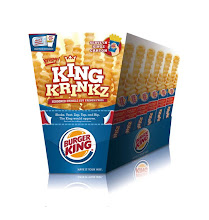
Hey, have you seen the Burger King microwavable French fries to the right that cook and serve in the same, cool tear-off fry-pod carton?

This blog includes excerpts from a weekly round-up of food industry & food licensing news provided free to Broad Street Licensing Group's clients, and as a paid subscription service (6 months $695; 1 year $1,125).

Too busy to keep up with the news wires & publications about the food business? If you or your company would like to subscribe to our news service, call Danielle Foley at Broad Street Licensing Group (tel. 973-655-0598) and ask for your free sample or click on our website.

Thursday, February 4, 2010

Great Shopping Experiences


A study by the Jay H. Baker Retail Initiative at the Wharton School, the Verde Group and the Retail Council of Canada called Discovering WOW – A Study of Great Retail Shopping Experiences in North America (which can be purchased for $2,500) has discovered — brace yourself — that 50% of all shoppers have experienced truly great “WOW” shopping trip.

Yet even when the earth moves, it doesn’t always translate into customer loyalty. Of the 26 “great shopping experiences” assessed in the study, less than 50% resulted in improved customer retention. The “Wow” experience happens often (52% of shoppers), and recently (35% within the last 6 months), usually falling into five distinct categories:

• Engagement - being polite, genuinely caring and interested in helping, acknowledging and listening

• Executional Excellence - patiently explaining and advising, checking stock, helping find products, having product knowledge, providing unexpected product quality

• Brand Experience - exciting store design/atmosphere, consistently great product quality, making customers feel they’re special and that they always get a deal

• Expediting - being sensitive to customers’ time and long check-out lines, being proactive in helping speed up the process

• Problem Recovery - helping resolve and compensate for problems, upgrading quality and ensuring complete satisfaction

Not surprisingly, the study found customers who have had a “WOW” experience 75% more loyal to that store than those who didn’t get a tingle, but “Brand Experience” and “Engagement” turn out to be the only elements that significantly built loyalty with “Brand Experience” the most important (40% more so than any other factor). Interestingly, stores had little trouble delivering “Engagement” elements, and did well with the others—with the notable exception of “Brand Experience,” the most crucial for building customer retention (see Appendix Item #1).

NOTE: Subscribers to our weekly newsletter received a free report on Hispanic shopper patterns and trends. Why are you getting this news on a delayed basis when you could be receiving it sooner?

This blog includes excerpts from a weekly round-up of food industry & food licensing news provided free to Broad Street Licensing Group's clients, and as a paid subscription service (6 months $695; 1 year $1,125).

Too busy to keep up with the news wires & publications about the food business? If you or your company would like to subscribe to our news service, call Danielle Foley at Broad Street Licensing Group (tel. 973-655-0598) and ask for your free sample or click on our website.

Monday, February 1, 2010

Coupons Stay Strong


It's no surprise that coupon usage has continued to rise during the Great Recession.

According to Marx Promotion Intelligence (a division of TNS Media Intelligence), Free Standing Insert (FSI) coupon activity increased 8.0% during 2009 versus the previous year to more than 272bn Coupons Dropped (published) as part of 203bn FSI pages. This is the highest level in the past decade, surpassing 2007’s 257bn Coupons Dropped. Retailer promotion pages also increased 37.7% to over 9bn pages (a record). This was part of more than $385bn in consumer incentives delivered via FSI coupons, up 15.0% from 2008. The average FSI coupon face value reached a new record ($1.42, up 6.5%). Average coupon expiration (known as “Fuse”) decreased to 9.3 weeks (down 3.9%) as manufacturers reduce their financial risk by limiting the time coupons are viable.

This blog includes excerpts from a weekly round-up of food industry & food licensing news provided free to Broad Street Licensing Group's clients, and as a paid subscription service (6 months $695; 1 year $1,125).

Too busy to keep up with the news wires & publications about the food business? If you or your company would like to subscribe to our news service, call Danielle Foley at Broad Street Licensing Group (tel. 973-655-0598) and ask for your free sample or click on our website.

Thursday, January 28, 2010

Food Lion Says ¡Olé!


While many firms talk about catering more to the Hispanic shopper, Food Lion is walking the walk.

Two more markets in North Carolina focusing on Hispanics will be expanded from the current five, with 10 old Triangle stores being converted to serve this new customer base. Estimates put the Hispanic grocery market currently at $30bn. Besides the usual offerings of dry goods like beans, tortillas and spices, the stores carry meat cuts and produce Hispanic shoppers normally search for at specialty markets. Employees receive Spanish language instruction and training in Hispanic culture so as to avoid gaffes and alienating the new clientele.

Signs announcing “Sabor Latino” (“Latin Flavor”) adorn the stores, and even Food Lion’s other stores are offering more products aimed at Latins. Marketing has relied on word-of-mouth, and the news has traveled quickly with sales up according to the company. When finished, 59 stores (roughly 10% of Food Lion’s 503 North Carolina locations) will have an Hispanic focus. FMI (the Food Marketing Institute, a grocery industry trade association) reports 61.8% of food retailers report increasing their ethnic products as a competitive strategy. While Hispanic products are attracting Hispanics, the foods are also luring in non-Hispanic customers looking for new options.

Food Lion isn’t the only one seeing dollar signs in the growing Hispanic market: homeopathic remedy marketer Hyland’s has launched a social networking site for Latina mothers. ComienzosSaludables.com (“healthy beginnings”) offers fully-bilingual culturally-relevant health information to the 25% of U.S. moms of Hispanic origin. The information includes pregnancy, infant care, raising a family, healthy lifestyle and, of course, treating a family’s health issues with natural medicines. The new venture follows Hyland’s other efforts to reach the growing Hispanic market, first with bilingual packaging, a baby development calendar in Spanish, and sponsorship of a community health worker program called Salud con Hyland’s.

According to eMarketer, 23MM U.S. Hispanics went online last year, with the total expected to reach 29MM by 2012 (though only 32% of Spanish-dominant Hispanic adults go online). Statistics show 70% of Latina mothers are under the age of 30, and the social networking component of Comienzos Saludables will include community forums, photo galleries, blogs, personal profile pages, and monthly newsletters.
According to Information Resources, Inc. Hispanic spending topped $34bn in 2008 and will grow to $52bn by 2015. Spending per household among Hispanic consumers significantly outpaces the national spending averages across nearly every channel. Johnson & Johnson launched a Spanish-language version of its parenting web site BabyCenter (Baby Center en Español), and Procter & Gamble (already one of the largest advertisers in Spanish magazines) directed $1MM of its ad-spend on Pampers Swaddlers against Spanish mothers in 2007. Besides baby care, other strong market opportunities among Hispanics include beauty care, laundry care and food and beverages that are either youth-oriented, offer specific health benefits (e.g., low sugar, high fiber) or are an ingredient or component of ethnic meals.
Clients of Broad Street Licensing Group and subscribers to our weekly newsletter received a free overview of the Hispanic market.

This blog includes excerpts from a weekly round-up of food industry & food licensing news provided free to Broad Street Licensing Group's clients, and as a paid subscription service (6 months $695; 1 year $1,125).

Too busy to keep up with the news wires & publications about the food business? If you or your company would like to subscribe to our news service, call Danielle Foley at Broad Street Licensing Group (tel. 973-655-0598) and ask for your free sample or click on our website.

Tuesday, January 26, 2010

Walgreens Grows the Food Retail Category


Now it's Walgreens.

Steve Johnson reported it on LinkedIn and on his blog, but I could've predicted it.

If I were in the prognostication racket.

But my business is helping restaurants and food brands navigate the rapidly-changing retail grocery business. And it's changing even more rapidly than in the past.

The rise of the "grocerant" has been detailed here and elsewhere. What's new is the embrace of food products by non-grocery retailers. Just as grocery stores are pretending to be restaurants, non-food outlets like CVS, Dollar Stores, and now Walgreens are moving into the food category. They've hired Jim Jensen as divisional merchandise manager in charge of fresh foods. He comes from Tesco's Fresh & Easy Markets, and will be in charge of ramping up Walgreen's "W" lines of prepared and fresh foods. Fresh & Easy was touted when it started out as "a convenience store on steroids," and while Tesco has stumbled here for a variety of reasons, the appeal of convenient food for busy consumers remains a sound one (especially since most c-store customers are males, not your traditional grocery buyer).
Walgreens already sells milk, eggs and other perishables, but they're looking for ways to up that load, citing stats that say 80% of Americans don’t know what they’re going to have for dinner at 4 in the afternoon. It's logical, then, they would be looking at “grab-and-go meals," salads, and sandwiches, along with selling its own private-label foods, especially what the company calls “meal components.”

The reasons are pretty simple for Walgreens' move: in the Great Recession, the only retailers who've thrived are those selling food. Hard goods titans like Target now look like drunken sailors, stumbling from one miscue to the other. The brand experts continue to sing the Minneapolis trendsetter's praises, but the numbers don't lie: food is the reason Walmart has thrived.

Surprisingly, grocery stores seem to think they can sell non-food items, which have a much higher profit margin than food (traditionally in the 1-3% range). We'll see about that.

This blog includes excerpts from a weekly round-up of food industry & food licensing news provided free to Broad Street Licensing Group's clients, and as a paid subscription service (6 months $695; 1 year $1,125).

Too busy to keep up with the news wires & publications about the food business? If you or your company would like to subscribe to our news service, call Danielle Foley at Broad Street Licensing Group (tel. 973-655-0598) and ask for your free sample or click on our website.

Thursday, January 21, 2010

The Rise of the Grocerant


One of the smartest guys on the 'Net is Steve Johnson whose blog is called "The Grocerant."

You can visit it here.

Grocerants are hybrid grocery stores and restaurants. After all, grocery stores and supermarkets have changed a lot since the jump by Wal-Mart into the category. And now the Recession is powering the move towards the "grocerant." Oh, food retailers have always had their roasted chickens and fresh salad bars, but now they're offering sushi, Asian noodles (not really Chinese or Thai per se), hot & cold appetizers and more. Take-home meals have been commonplace with grocers, but increasingly they're replacing "take out" with "eat in" for some upscale retailers. Barnes & Noble-style cafes are no longer the rarity.

Grocers are seeing 7-10% growth in sales of prepared items, largely at the expense of restaurants. In the past, grocery stores had been losing out steadily to restaurants, with 48.5% of total food expenditures in 2008 spent away from home. Now things have shifted, with the National Restaurant Assoc. estimating restaurant sales will be off 1% in 2009 (conservative if you ask me).
In order to attract the restaurant customer, Albertsons has pegged their in-store prepared foods to the slogan “Simply Good Meals,” grouping foods together for easy menu combos and placed in the “4:15” sections in line with the time busy shoppers are looking to put together dinner.
Southern California chain Stater Bros. is adding two kinds of meatloaf for those wanting “comfort food,” but also offers carnitas and chicken teriyaki.
With trips to the supermarket steadily declining, the challenge for retailers is to keep value and not resort solely to price cuts. Chains like Stater Bros. and Albertsons have slashed prices 20% on many items, and have reported lowered earnings as a result, though some chains like Kroger report profits up. The leader in providing prepared meal innovations is Tesco-owned Fresh & Easy who features a line of meals intended to feed a family of four costing just $8. While the category can be popular and lucrative, retailers are sometimes unsure how to capitalize. Consumers think the foods are prepared on-premises (they aren’t), and some shoppers resist paying premium prices for no-name or store-branded prepared foods, so moving beyond five varieties of egg or potato salad can be a strain on supermarket supply lines.
Finally, attracting good food prep talent to work in a supermarket has been an uphill battle.
But expect more market share and "share of stomach" to go to the grocerants.

This blog includes excerpts from a weekly round-up of food industry & food licensing news provided free to Broad Street Licensing Group's clients, and as a paid subscription service (6 months $695; 1 year $1,125).

Too busy to keep up with the news wires & publications about the food business? If you or your company would like to subscribe to our news service, call Danielle Foley at Broad Street Licensing Group (tel. 973-655-0598) and ask for your free sample or click on our website.

Wednesday, January 13, 2010

Aldi


German retailer Aldi plans to make an impact in the US market.

Unlike most American grocers, Aldi has a smaller footprint (10K square feet), with fewer SKUs, it charges for bags (5-99¢ depending on the size) and requires a deposit on shopping carts (25¢). It carries few national brand-name products, and doesn’t accept either checks or credit cards. It relies on prices “up to 50%” below other supermarket chains. The company achieves its value proposition by skipping the other services its competitors offer like banking, pharmacies, bagging clerks, check cashing, or photo processing.

Like a good German retailer, it isn’t open 24 hours a day, and doesn’t redeem manufacturers’ coupons. About 40% of its selling space is devoted to fresh, refrigerated or frozen foods highlighting 1,400 “fast-moving” items (95% Private Label). It’s no surprise customer loyalty cards are nowhere to be found (Whole Foods also eschews loyalty programs). Aldi currently has 1,000 U.S. stores and plans to add 80 more in 2009.This blog includes excerpts from a weekly round-up of food industry & food licensing news provided free to Broad Street Licensing Group's clients, and as a paid subscription service (6 months $695; 1 year $1,125).

Too busy to keep up with the news wires & publications about the food business? If you or your company would like to subscribe to our news service, call Danielle Foley at Broad Street Licensing Group (tel. 973-655-0598) and ask for your free sample or click on our website.

Monday, January 11, 2010

Consumer Spending & Cost-Cutting Strategies Examined


Perhaps at no time in recent memory have consumers been so thoroughly, closely and frequently studied as those living during The Great Recession.

Another report about their spending and cost-cutting strategies from Information Resources Inc. has detailed which groups will be most likely to continue these habits long-term. According to company president Thom Blischok, “we went beyond studying the common spending, self-reliance and self-health strategies that are becoming common place in today’s environment and examined how economic pressures have driven different types of consumers — by income level, household composition and even varying consumer mindsets — to change their strategies.”

Citing what it calls a “Misery Index” reflecting consumer economic wellbeing and expectations about the economy’s future, it currently stands at 14% (vs. 13% one year ago and below 8% in 2007). With most forecasters seeing a slow 2009 and a modest improvement in 2010, the report says current spending strategies will stay with consumers. The company maps the buying landscape with three factors:

• Income Level: consumers in the under $35K bracket have seen the most-drastic change in expectations and plans, though nearly ½ of those in the over $100K bracket report postponing non-grocery purchases (For more details go to Appendix item 1)

• Household Composition: Asked whether households w/o children were more or less likely to continue purchasing brand names, 78% of households with kids earning under $55K are postponing non-grocery purchases; but 64% of this same segment will continue treating themselves to affordable indulgences vs. 54% earning the same without children present.

• Consumer Sentiment: IRI identified three categories of shoppers: optimists, maintainers and pessimists. Pessimists are the poster children for the behavioral change researchers are claiming for all consumers, such as searching for sale prices (87% vs. 82% for all households), making personal care products last longer (62% vs. 55%), and buying fewer prepared meals at grocery stores (61% vs. 55% for all households).

This blog includes excerpts from a weekly round-up of food industry & food licensing news provided free to Broad Street Licensing Group's clients, and as a paid subscription service (6 months $695; 1 year $1,125).

Too busy to keep up with the news wires & publications about the food business? If you or your company would like to subscribe to our news service, call Danielle Foley at Broad Street Licensing Group (tel. 973-655-0598) and ask for your free sample or click on our website.