
.

FOOD BUSINESS NEWS:

Discussions about the food industry, restaurants, and licensed food brand extensions

A World Leader

A World Leader
One of the World's Top 20 Licensing Agents
Showing posts with label Licensing. Show all posts

Wednesday, October 14, 2009

Cheeseburger in Paradise


This article in Chain Leader magazine about the 34-unit Cheeseburger in Paradise chain of casual dining restaurants brings up just how widespread licensing is.

The company licenses its name from Jimmy Buffet's Margaritaville Holdings, and comes from a hit song Buffet made famous decades ago. The notion of branding a restaurant chain with a pop song lyric might seem strange, but it's no weirder than some of the concepts that have made their way into the foodservice world. We had a client that owned a rather pedestrian shellfish brand tell us they wanted to see it licensed to a restaurant.

Yeah, right.

The article doesn't just show how pervasive licensing is, but how it can't succeed without making sense. The chain was originally owned by the heavily-leveraged OSI, owners of the Outback Steakhouse chain (among others). OSI was getting hammered by Wall Street when it was a publicly-traded company, so the chain's management team borrowed truckloads of money and went private, thinking "we won't have to answer to those annoying money guys every quarter and can do what's right for long-term growth."

Unfortunately, their timing couldn't have been worse. The casual dining segment of the restaurant biz was already in trouble when the economy went South, and consumers have consistently voted with their feet since then, opting either for cheaper meals out (trading down to Fast Food) or by staying home. OSI dumped Cheeseburger for $2MM recently, spinning it off to a group of investors.

Fortunately for Cheeseburger in Paradise (the restaurant), some sanity has prevailed, and the licensor (Jimmy Buffet's people) have lowered the royalty rate. One of the trickiest propositions in licensing is negotiating a fair royalty rate, both for the licensor and the licensee. If the rate is too low, the licensee gets rich off your brand. If it's too high, the products end up being priced out of the market and the deal is a flop.

The lesson from all this is two-fold: you never know where licensing is going to turn up, and make sure sanity prevails when negotiating a licensing deal.
Excerpted from BSLG's weekly subscription news reader service Food Business News. To subscribe or for information about licensing, contact Broad Street Licensing Group (tel. 973-655-0598)

Tuesday, October 13, 2009


This article about Burger King licensee The Inventure Group says how the company has seen significant growth from its lines of snack chips, including that from Burger King.

In 2007, the company signed a deal with Burger King to produce a line of snack foods under the fast-food chain's moniker.
They include a crispy puffed snack shaped and flavored like onion rings (a popular Burger King offering) and another shaped and flavored like French toast.
The company reported that sales of the Burger King licensed products were up 45 percent in the second quarter of 2009.
"We're thrilled with the Burger King snack rollout," said Steven Sklar, Inventure's senior vice president of marketing.
The licensing agreements allow Inventure to use the name recognition of the licensee to launch new products.
"It's much less expensive to launch a new product under a known brand that to build a new brand on your own," Sklar said.
While Inventure gets a relatively inexpensive way to bring out new products, the licensee gains publicity from its name hanging in vending machines and convenience stores.


Excerpted from BSLG's weekly subscription news reader service Food Business News. To subscribe or for information about licensing, contact Broad Street Licensing Group (tel. 973-655-0598)

Tuesday, September 22, 2009

Hidden Dangers in Private Equity Brand Ownership


One of the more remarkable developments has been the rise of private equity ownership of brands. By pooling investor monies into unregulated and semi-regulated networks, PE companies have turned out to be important players in most areas of the economy. This is true for brand ownership, especially with CPG (Consumer Package Goods) houses shedding brands that don't "fit" with their portfolio, or grabbing up companies in receivership. Increasingly, licensing agents find themselves working on brands that are owned by companies heavily-leveraged or owned outright by PE money guys.

There's an old saw in baseball that eventually, the manager of any team will get fired. This is equally true for licensing agents, who often are pushed out by companies who decide they can manage their licensing programs themselves, or who simply decide that licensing is no longer a viable or strategic component for them. So up until recently, "post-term compensation" was the hot-button topic for agents. The concept concerns how long an agent will continue to receive all or part of their fees after their contract with the licensor or brand has ended. Some contracts go into perpetuity, but most companies insist on a "sunset" provision. Agents and brands continue to arm wrestle over the length of post-term compensation.

More troubling is the problem of private equity ownership of companies and/or brands. Oh, I have nothing against the PE money guys, they're all very smart and have saved or resurrected dead brands. They have cash to spend, and few hide-bound reservations about "degrading" the brands or companies they've acquired. Because PE funds need to show growth and profits quickly, PE managers want results, and understand often better than restaurant execs or brand managers how licensing can help generate both fast traction and raise the overall value of the brand or company.

But because of that relentless pressure to make money, PE guys are thinking about selling a brand or company the moment they buy it. The question isn't IF they will sell, but WHEN. The current economy has slowed this process quite a bit, but money guys typically are looking to recover their investment within a few years.

Now how would that affect a licensing agent?

Simple: you work for company A licensing their brand. You put in place a nice deal or two that raise the overall value of the brand or company. The property is sold, sometimes to another manufacturer, or perhaps a different PE group. The deals you've put in place may or may not survive the transfer. Suppose a competitor is buying the company and plans to quietly allow its brand(s) to die? Or the new company isn't interested in having you continue as the brand's agent?

PE guys like their transactions to be "clean." This means no encumbrances on the transfer that could hold up the deal or cost them points. But if you don't get protected, your chances of being screwed rise dramatically. The answer? A transfer fee that brings you something for the effort you've put into building up the brand.

Naturally, licensors and PE funds HATE any kind of transfer fee, and you'll have to argue hard to get one into your representation agreements. But if more licensing agents become aware of this issue, the chances of getting transfer fees into most contracts will help us all.

Excerpted from BSLG's weekly subscription news reader service Food Business News. To subscribe or for information about licensing, contact Broad Street Licensing Group (tel. 973-655-0598)

Friday, August 21, 2009

Prepared & Refrigerated Meals Category Expands


Brits are accustomed to purchasing refrigerated "ready meals" that range from raw to fully-cooked, but the frozens category has swamped chilled prepared foods in the States.

Part of the reason has been concern about safety, but that may be changing. Grocery chains are adding more prepared meals in their deli and chilled cases, with food research giant Technomic reporting consumers claims of purchasing such meals are up 25%. One factor may be the quest to trade down in cost from eating out without having to resort to cooking it yourself from scratch. The trend even has a name: the Whole Foods Effect, inspired by that retailer's plethora of prepared meal options, including Asian, Indian, Latin, and Italian "hot bars" offering shoppers creative alternatives to the usual take-out.

Publix and Winn-Dixie have jumped on the bandwagon with their own combinations of improved deli, salad bars and slow-cooked meats and soups. Restaurants are fighting back with more take-out and licensing: TGI Friday's has a new line of licensed skillet meals reported here in previous editions of this news source.

Excerpted from BSLG's weekly subscription news reader service Food Business News. To subscribe or for information about licensing, contact Broad Street Licensing Group (tel. 973-655-0598)

Thursday, August 20, 2009

Save Us from the CEOs!!


David Farkas of Chain Leader writes some interesting things about Starbucks founder and eminence gris Howard Schultz.

Schultz was recently profiled in Business Week-- and not very flatteringly, either. Seems that, like with a lot of CEOs, he can't or won't delegate decisions to his otherwise smart and rigorous underlings. The "case study" for it all is how Schultz was against the chain using skim milk in its lattes, despite the fact his competitors were. Nothing changed until Schultz personally witnessed a customer walk out of a Starbuck's without purchasing her morning brew because her only choice was whole milk.

Hey, I think 2% tastes better in my tea than skim milk, but far be it for me to force anyone else to drink their hot beverages my way.

Yet anyone in business has a favorite story about the quirky CEO who insisted on this, or wouldn't do that because he did/did not like it. When we were representing Good Humor-Breyers Ice Cream, the CEO would not allow a licensing deal for make-your-own Popsicle toys because:

1.) It would "denigrate the brand experience"

2.) Why would moms & kids buy Popsicles if they could make their own?

3.) The money wasn't enough to overcome the "risk."

Hey, we're talking about a toy here! A toy given during the holidays, a toy where the child likely will have lost one or more of the parts by New Year's or soon thereafter. And no consumer is going to taste a make-it-yourself Popsicle and say "yuk, I'll never buy one again," or "this is denigrating my experience of the brand."

Sometimes, as Freud would say, a cigar is just a smoke and a toy is just a toy.

Baskin-Robbins made a ton of money from the first make-your-own ice cream toy set. And we had three companies prepared to put large $$$$ up-front. But at the end of the day, the CEO wouldn't listen to the licensing people. He didn't like it. It didn't happen.

The only thing I can say in defense of the charismatic, anal-retentive CEO is: save us from the marketers with their reams of paper and studies. It's one reason large companies almost never are innovators.

Excerpted from BSLG's weekly subscription news reader service Food Business News. To subscribe or for information about licensing, contact Broad Street Licensing Group (tel. 973-655-0598)

Monday, August 10, 2009

Shaking Things Up in the Ad World


This article in Ad Age about Coke and other companies demanding "results" before paying their ad agencies more than expenses got me to thinking.

When we pitch a new client, we usually say "unlike your ad agency, your p.r. firm or your graphics house, we'll both build your brand and pay you royalties from the work we do." Ad agencies have a very cosy business model in comparison to licensing agencies: they bill for services and don't have to worry about cash flow unless the ad campaign is a flop. But even then, the client may simply ask for a new campaign before risking the hassle of starting over with a new agency.

In licensing, we market your brand, negotiate the deal, and monitor the account. The licensee is required to pay royalties every quarter, so our clients have a steady income stream. Licensing rarely can rival core sales, but can reach significant dollar amounts.

Ad agencies like to talk about brand impressions. Our philosophy at Broad Street Licensing Group is that without sales of licensed products, there are no brand impressions. And our track record shows we know what we're doing.

Excerpted from BSLG's weekly subscription news reader service Food Business News. To subscribe or for information about licensing, contact Broad Street Licensing Group (tel. 973-655-0598)

Monday, July 20, 2009

Restaurants & Retail


The success of restaurants like Burger King and California Pizza Kitchen in the grocery channel has led some restaurant execs to think "wow, this is easy," and others to worry "this must be a real threat to our franchisees." In both cases, they're wrong.

The food industry is changing in so many respects. Both convenience stores and supermarkets now compete with restaurants in offering meal solutions. The term "meal solutions" sounds like marketing-speak or FrankenEnglish, but it captures the idea that we don't sit down at the table to eat as much as we once did. You can "grab & go," eat a snack, eat several snacks, get take-out at a restaurant or from a supermarket, heat something in the microwave or get a sandwich from a vending machine. In many offices, vending machines and microwaves have replaced the company cafeteria, and busy workers often don't have the time to go out to eat.

Licensing is evolving to handle these changes, crossing boundaries and solving the needs of manufacturers and retailers for products that address what consumers want. We put together a deal between a major food brand with one of the premier food manufacturers for the latter to license cutting-edge technology in baked goods. As a major brand, they need certain economies of scale to justify investing in a new technology, so until the product line reaches maturity, the baked goods technology company will make the products under a contract manufacturing/co-packing agreement. Pretty slick for both sides.

In the case of restaurants, there have been experiments with in-store kiosks and mini-restaurants to try bringing the restaurant experience to shoppers. The most notable is the one that didn't work out well: McDonald's put restaurants in Wal-Marts, but it didn't "take." Burger King has launched its small footprint "Whopper Bar" with the goal of bringing the brand to places where a full-blown restaurant won't fit. We trust they'll be smart enough to stay out of retail environments. For one reason, grocery retailers dream of being restaurants, wanting to retain the dollars consumers spend eating out by offering them "meal solutions" while they do their food shopping. Wegmans and A&P are both converting parts of their stores into mini restaurants.

The key is understanding the different meal solutions the consumer is looking for: the mom standing in front of the freezer case looking for tonight's dinner has different "metrics" in her head about what will work for her needs than the young male "Super Fan" who goes to Burger King once or twice a week for an indulgent outing. Restaurants, food manufacturers and retailers all need to understand these differences and not conflate different eating experiences into one.

Excerpted from BSLG's weekly subscription news reader service Food Business News. To subscribe or for information about licensing, contact Broad Street Licensing Group (tel. 973-655-0598)

Monday, July 6, 2009

Broad Street Licensing Group in Print


This article by me, Bill Cross, is a succinct accounting of what we have done and and can for restaurant brands looking to grow their reach through the retail grocery aisle.

Excerpted from BSLG's weekly subscription news reader service Food Business News. To subscribe or for information about licensing, contact Broad Street Licensing Group (tel. 973-655-0598)

Tuesday, May 26, 2009

Around the Food Industry


Frito-Lay to Target Women

Snacking has long been seen as guy turf, but PepsiCo's Frito-Lay division is looking to introduce Smartfood popcorn clusters, its first snack targeted specifically at women. The snacks will be a combination of sweet & salty, and are being touted as a source of fiber and calcium. In addition, the snacks will contain no artificial colors, flavors or preservatives, and will be packed in 120-calorie individual bags. PepsiCo's CEO, John Compton, anticipates $650MM in sales to women. Additionally F-L will be concentrating on more "healthier for you" offerings.

New British "Dating Service" For Waste

The London Waste and Recycling Board was launched last July to broker waste producers (food manufactures & retailers) with recyclers and energy users to help encourage innovation in waste disposal. The goal is to help generate energy through anaerobic digestion and improve recycling of waste materials. Estimates boast supplying up to £504MM 10% of London’s gas and electricity costs. The move comes as the British Retail Consortium (BRC) has appealed to government to encourage recycling rather piling on new costs to retailers as is the usual solution. A new report from the Local Government Association (LGA) is lobbying for supermarkets to pay for recycling services to reduce the £1.8bn spent on waste removal and landfill through 2011. Reports show up to 40% of food packaging in the U.K. could be recycled. Retailers counter that consumers often have no way to recycle the packaging materials at the local level. In the U.S., recycled materials have piled up without adequate end users for the material, resulting in localities now accepting only limited amounts of recyclable plastics.

Nestlé Income Waaaay Up

In a further sign of food companies weathering the current economic storm, net profit for Nestlé climbed 69% for 2008 to 18bn Swiss francs ($15bn), up from 11MM Swiss francs in 2008. Sales for the year were 109,909MM Swiss francs ($93.596MM), up 2% from 107,552MM Swiss francs during the previous year. "Zone Americas" was the company’s engine for growth, with sales of 33,134MM Swiss francs ($28,209MM), a 10.3% growth rate with 2.7% real internal growth. Nestlé committed to 5% growth during the coming year, based largely on its prediction of leveraging its innovation and strong core brands.

Unilever Focusing – Again – on Volume

Buffeted by bad publicity surrounding a Belgian grocery chain's decision to pull its products for "excessive profits," Anglo-Dutch giant Unilever has announced its intention of focusing on volume in 2009 according to CFO Jim Lawrence. Volume actually fell in the 4th quarter of 2008, and investors generally like to see top-line sales always inching upwards. But as usual wholly lacking in fresh ideas, the company says it will consider bringing down prices by putting out smaller packages. No surprise for a company who many critics argue ruined the Ben & Jerry's brand after it purchased the property, then (despite promises to leave well enough alone) tried to run it like any other brand in their portfolio. Unilever also once turned down a snack licensing opportunity our company brought them that could have generated 7-figure royalties in favor of co-packing the product at a net loss. In true conglomerate fashion, the company eventually did nothing with the opportunity.

For information about licensing, contact Broad Street Licensing Group (tel. 973-655-0598)

Tuesday, May 19, 2009

Brand Licensing vs. Franchise Licensing


It's often said that American and the United Kingdom are "two countries separated by a common language." We sometimes just can't sort out what they say without a translator.

The same can be said about brand licensing and franchising.

Franchising involves the licensing of the franchisor's brand to the franchisee. For example, if I open a Burger King restaurant, I'm allowed to use the brand and products under license from Burger King Corporation for the operation of my restaurant. I can't sell Burger King buns in the local supermarket, can't print up t-shirts with cute designs on them to sell on the corner or at the local flea market. All I can do is sell Whoppers, Original Chicken Sandwiches, Croissan'Wiches, Apple Friesm drinks and other items stipulated by the franchisor (BKC).

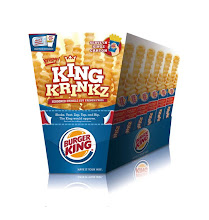
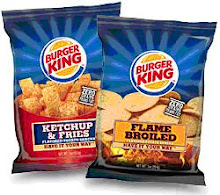
Brand licensing is when a food manufacturer "rents" the brand to use on products for sale in a specific channel of distribution. The Burger King-licensed snack chips pictured above, for example, are part of a deal Broad Street Licensing Group brokered for client Burger King. The chips (in Ketchup & Fries, Flame-Broiled and Onion Ring flavors among others) are manufactured by a company in Arizona called The Inventure Group. They pay a royalty to Burger King for the use of the brand name, advice on packaging, etc. It's actually more complex than all that, but I'll simplify here so I don't have to charge you a consulting fee....

One problem is that restaurant chains often confuse these two forms of licensing, thinking when they get calls from agencies looking to help them leverage their brands to retail "hey, we already do licensing." Or they assign someone in franchising to look into it, thinking there's some connection.

Not at all.

Licensing is a specialized skill set that requires a professional. Either hire me or hire someone like me, but as the car ads say in their fine print: "Professional Driver, Don't Try This On Your Own!"
For information about licensing, contact Broad Street Licensing Group (tel. 973-655-0598)

Monday, April 27, 2009

Do-It-Yourself Food Licensing

Cartoon courtesy of CT Yoon


Pitching a major restaurant brand the other day, I ended up speaking with their "licensing maven." It turns out the chain has been dipping their toe in the water by extending their brand through some non-core menu items at retail. The lady was very bright, but clearly was learning on the job, having come over to the brand from the financial services sector (no comment you wags!). As we discussed leveraging the chain's equity to retail and my firm's interest in representing them, it was immediately obvious she knows little or nothing about the food industry and was trying to pump me for information about how Burger King was doing this with their hugely successful chip license. Were we using brokers or trade reps to place the products? How did we get the chips into vending machines?

First of all, I can't give you free consultation in an area where Broad Street Licensing Group has its breand & butter business. Our firm has an extensive list of proprietary contacts, information sources, and years of doing this sort of thing every day. It reminds me of the in-house counsels who think because they've put together a few licensing agreements they know how to do licensing.

Sorry, but unless you've come out of one of the studios or TV networks where licensing is a major component of their business, you likely have only the most limited knowledge of the industry and licensing contracts.

But I digress.

When it comes to food licensing, the licensor is never responsable for product placement unless you're using a co-packer to extend your brand directly as some companies do, mostly because they only want a few close-in products on retail shelves. But if you're looking to do a really impactful leveraging of your brand to retail, what the hell do you know about the grocery business? Do you understand slotting fees, ANSI, DSD, ACV, trade deductions, forward buys, FIFO, COOL, bunkers, branch houses, transfers, or application identifiers? If not, you might want to re-think doing it yourself.

Remember the old legal adage how a man who represents himself has a fool for a client.

So when she purred how "we're going slowly so we do it right," I thought in my head "you're going slowly because you don't have a clue."